A place I won't forget
The golden dome, the historic chapels and Napoleon’s tomb, all in one visit.
Visiting the Dôme des Invalides
When in Paris a year ago, I visited the Hôtel National des Invalides, which is a large building complex commissioned by Louis XIV in the 17th Century as a home and hospital struct6rue for wounded service men in his army.
The complex is located in the 7th arrondisment on the left bank of the River Seine, quite close to the Champ-de-Mars containing the Eiffel Tower. The complex is made up of give buildings and museum spaces, including museums such as the Musée de l'Armée (Army Museum) and the Musée de l'Ordre de la Libération, but this article covers visitng the Dôme des Invalides (I will cover the wider museum as part of a later Paris in 3 days guide).
The Dôme itself was originally built as a royal chapel for Louis XIV, while the adjoining Saint-Louis church was used by the soldiers and veterans living in the complex. From outside, the huge golden dome is really impressive, and was completed in 1706, with its gilded exterior being one of the most recognisable features of the whole complex. Your ticket for the complex costs approximately 17e and this covers the dome.
Arriving at the Dôme
If you're coming over on a short-haul flight, you might also find my short-haul flight packing list useful before your trip.
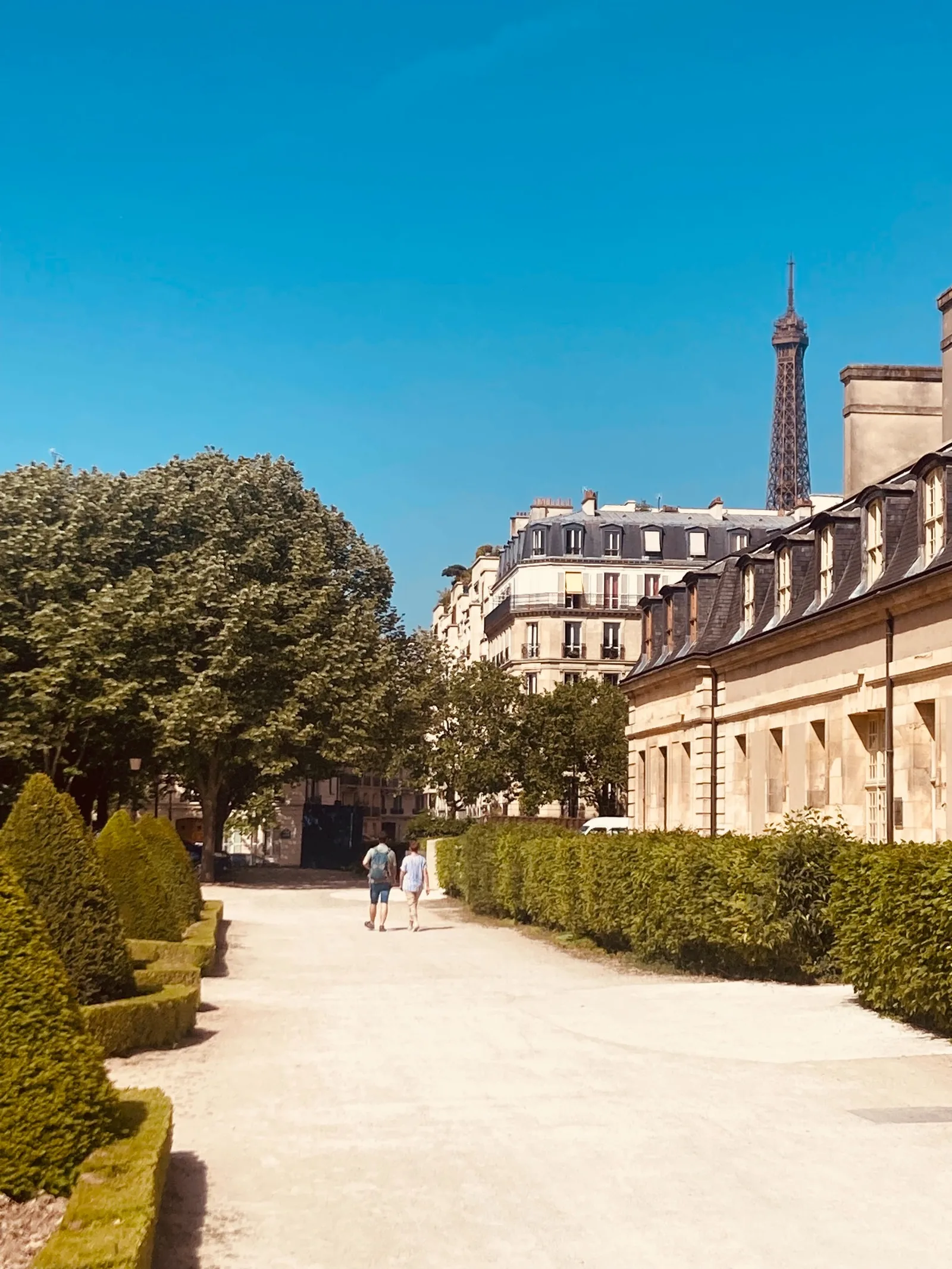
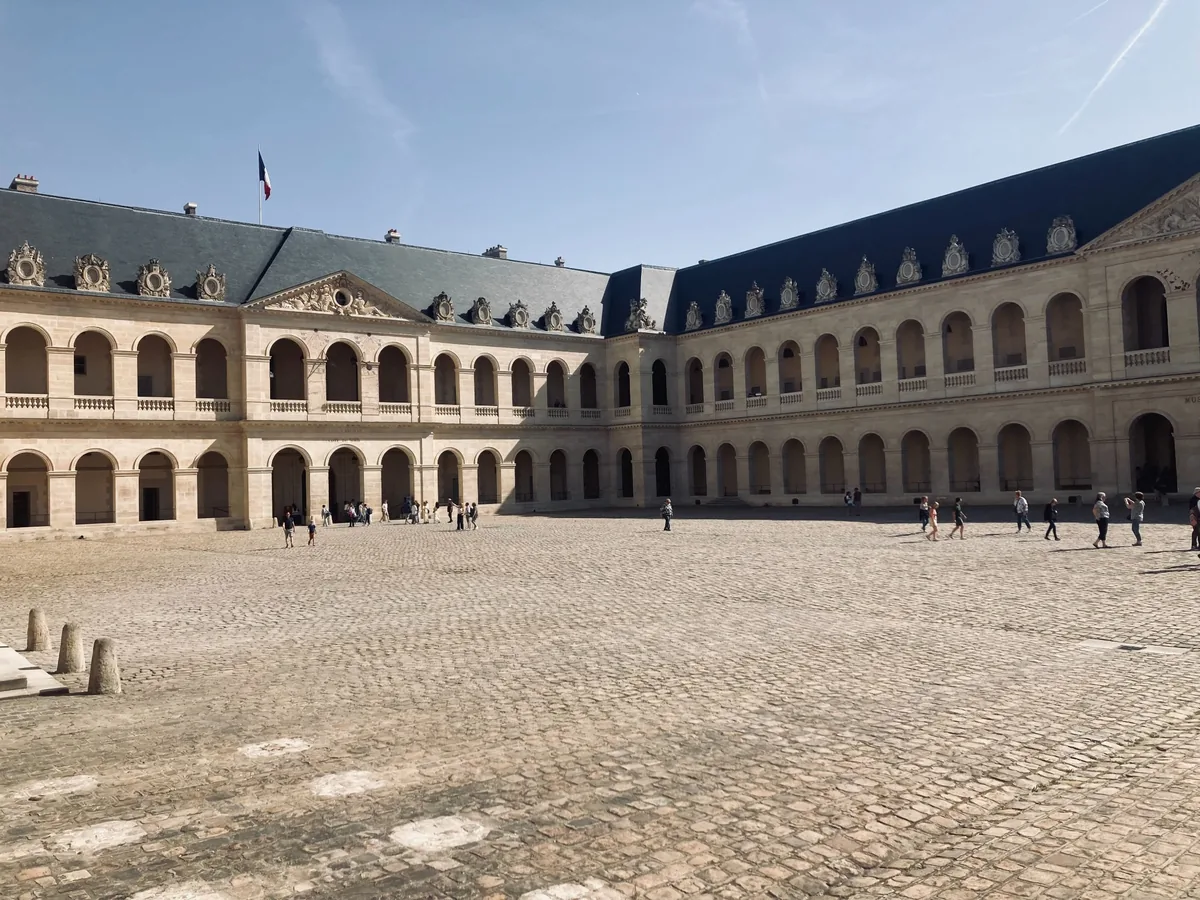
You arrive at the dome having walked through the main Cour d'Honneur courtyard if you arrive from the 129 rue de Grenelle north entrance (e.g. the front section where the ticket office is). The formal garden immediately to the west side of the dome is called the Jardin de l'Intendant (Garden of the Steward), and it is a nice area to walk around and have a coffee in before you enter the Dome.
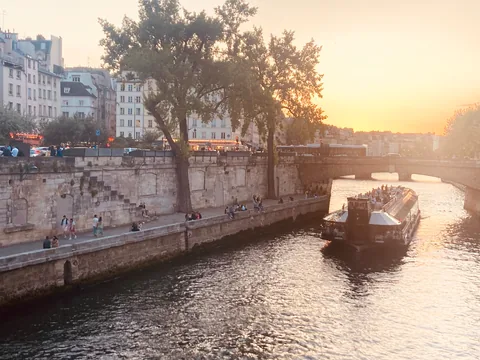
If you would like another nice walk while in Paris, you can also read my walk along the Seine to Notre-Dame, which takes you along the river through the city.
Inside the Dôme
After entering the large doors of the entrance, you step into a large sunlit baroque hall, which contains an really impressive giant circular opening within the floor. If you look down from the balustrade, you see Napoleon’s tomb, which I will summarise later. As you walk around you can see Corner Chapels, which house the tombs of Napoleon’s brothers as well as French war heroes. The four tombs are as follows:
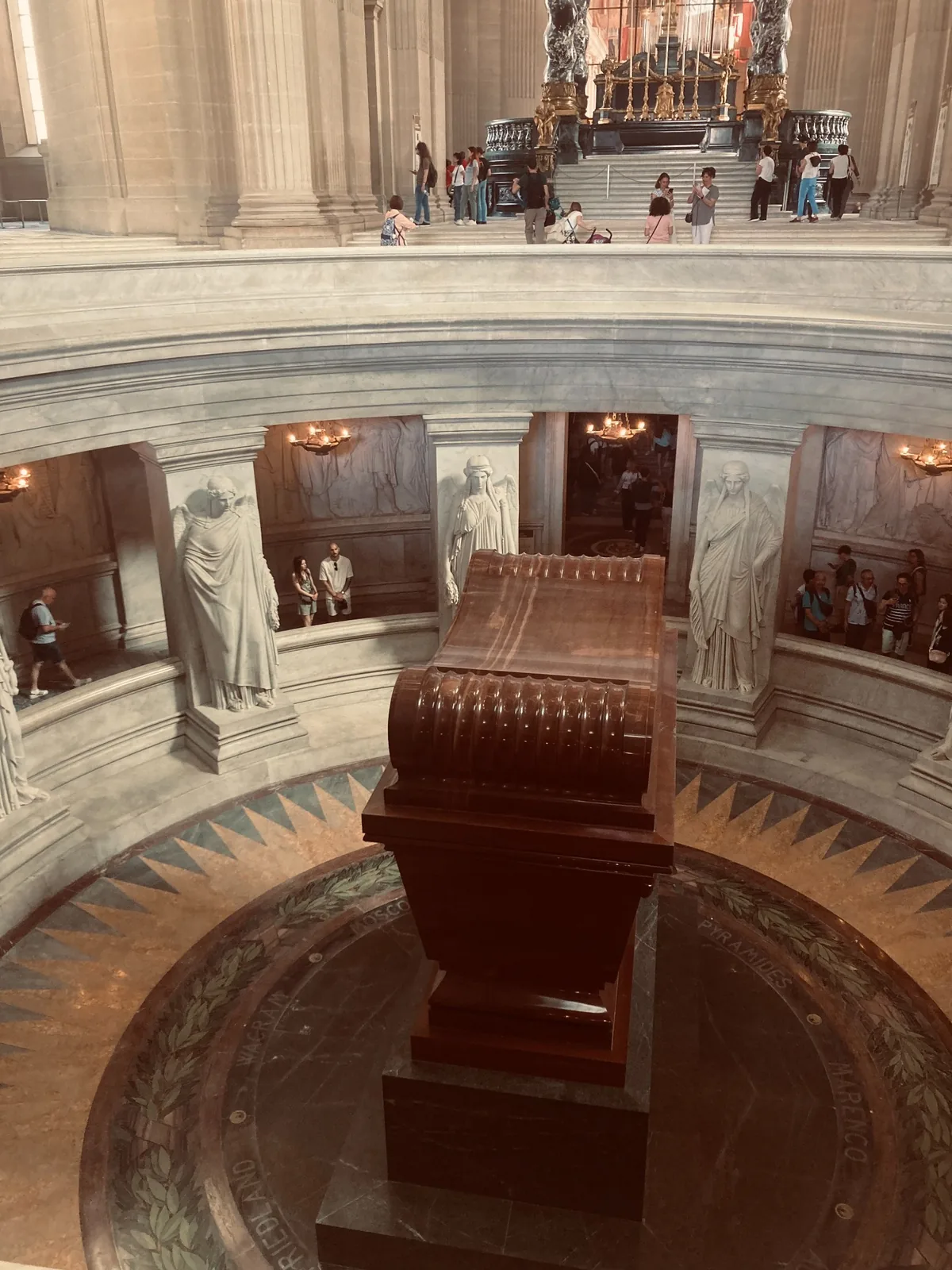
The four corner chapels
1: Joseph Bonaparte's Chapel.
In one of the front corner chapel’s the tomb of Napoleon’s older brother, Joseph Bonaparte, is situated within a dark marble sarcophagus . During his life he had served as King of Naples and King of Spain, while his brother was in power.
2: Jérôme Bonaparte's Chapel.
If you look directly across into the opposite front corner chapel, you see the tomb of Napoleon’s youngest brother, the former King of Westphalia, with the tomb showing a bronze statue of him in army uniform.
3: Ferdinand Foch's Tomb.
If you move to the rear corner chapels, you see the dramatic bronze monument for Marshal Foch, who was the Supreme Allied Commander during World War I. There is a powerful sculpture there showing his coffin being carried on the shoulders of French soldiers.
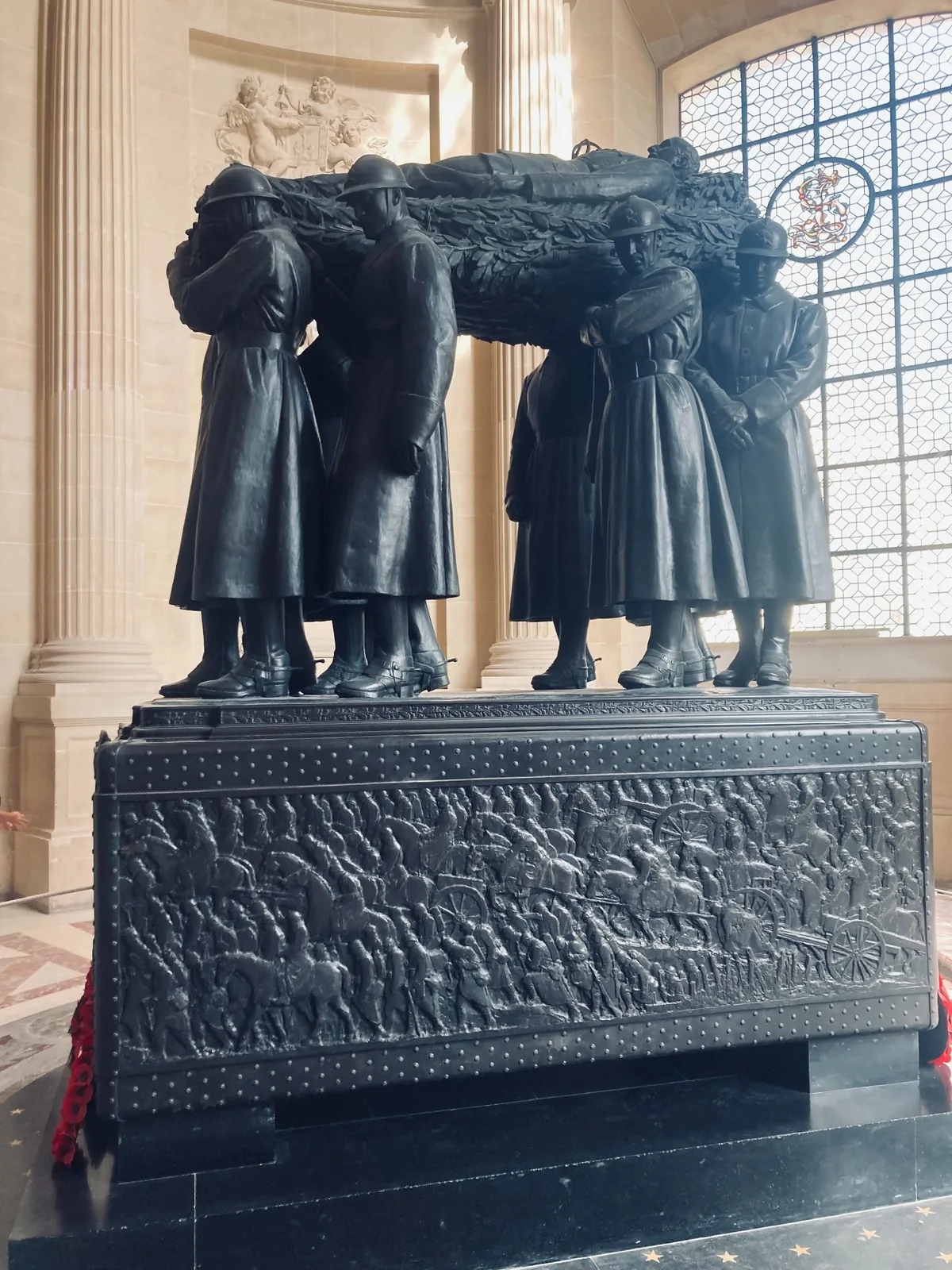
4: Hubert Lyautey's Tomb.
When you then finally walk to the other rear corner chapel, you see the ornate tomb of Marshal Lyautey, who was a prominent French general and colonial administrator. Showing the artistic influence of where he served, this is beautifully decorated with traditional Moroccan-style geometric patterns.
The other tombs and the altar
Once you have seen the chapels, you can also see the side transepts which contain the marble tombs of Henri de La Tour d'Auvergne, Vicomte de Turenne, one of Louis XIV’s greatest generals, and Sébastien Le Prestre de Vauban, Louis XIV’s brilliant military engineer, which holds an urn containing his heart and uses a striking black and white marble for the monument.
If you then look directly opposite the entrance, you see The Baroque Baldachin, which is a towering gilded canopy supported by four huge twisted black-and-white marble columns, inspired by St. Peter's Basilica in Rome, and the behind this altar is a floor-to-ceiling glass window which lets you peer straight into the adjacent Cathédrale Saint-Louis-des-Invalides, which is can be accessed by themain Cour d'Honneur courtyard, where rows of captured enemy banners hang from the ceiling.
The painted cupola
Tip: Before going down to the crypt, I would recommend looking up at the huge ceiling, which contains the Painted Cupola Overhead. Positioned directly above the circular floor opening is Charles de La Fosse’s massive, 107-meter-high painted dome which depicts Saint Louis presenting his sword to Christ, lit by hidden golden windows, and is really striking.
Also, look down at your feet, where the floor has an intricate, inlaid marble featuring beautifully laid out royal symbols and geometric designs
Napoleon’s tomb
Once you have looked at all the main areas of the dome, you then descend to Napoleon’s tomb. Napoleon had died in exile on the island of Saint Helena in 1821, and his body was brought back to France in 1840, before finally being placed within the tomb in 1861.
Entering the crypt
Before you enter you see two large imposing allegorical statues representing Civil Justice and Imperial Power (also referred to as Military Force). These were sculpted by Francisque Joseph Duret, and are very impressive in their scale, with visually they appear to bear the weight of the doorway lintel above them.
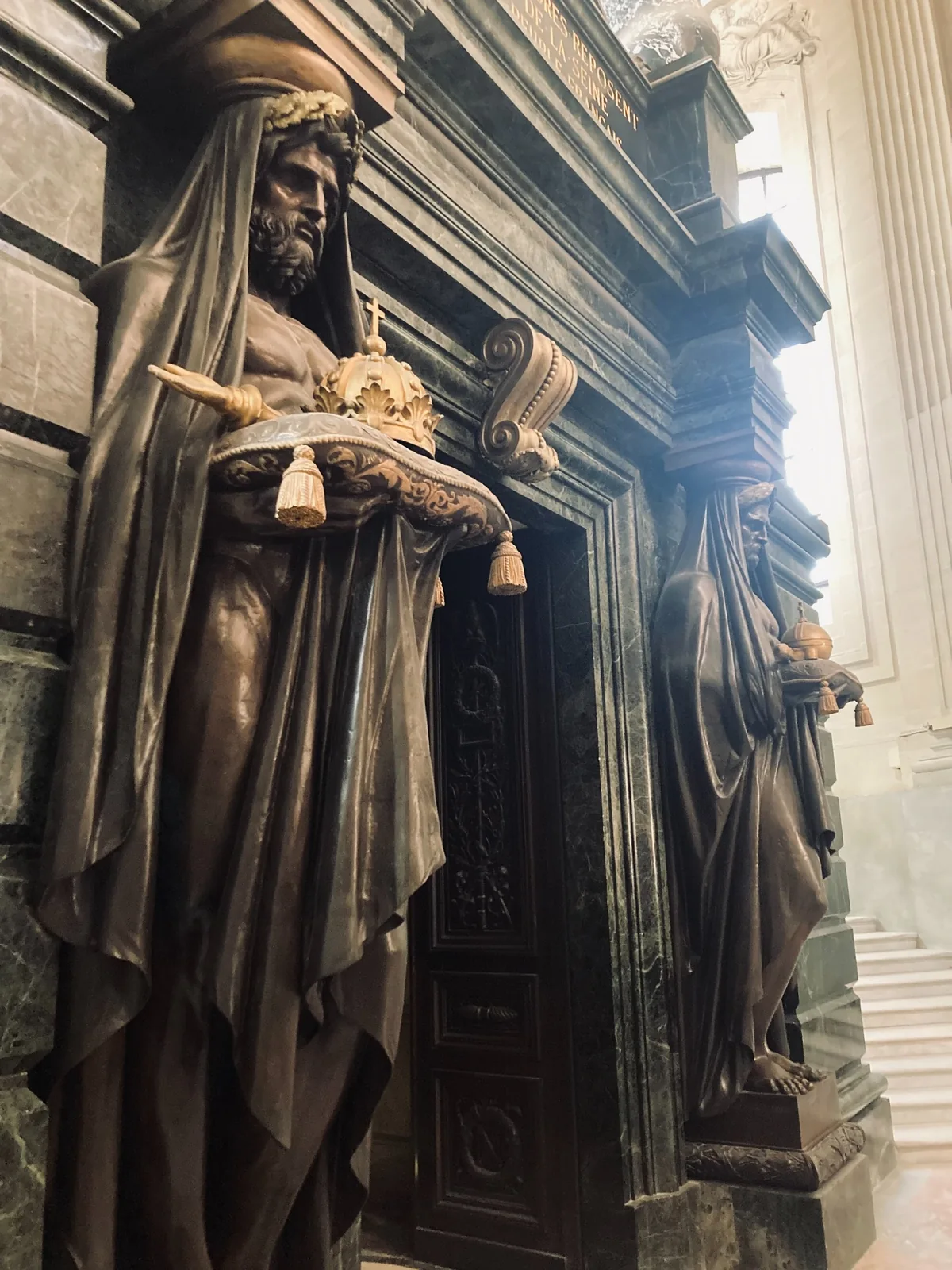
The sarcophagus
As you go in to the tomb area, you see the tomb within the main circular area. The centerpiece is a massive, gleaming red quartzite sarcophagus resting on a pedestal of green Vosges granite, and inside this monumental stone outer shell, Napoleon’s body is enclosed within five nested coffins made of tin, mahogany, lead, and ebony.
The Victories and marble reliefs
When you look around the external walkway, you also see twelve towering marble statues representing Napoleon’s major military victories, while the mosaic floor beneath the tomb forms a giant laurel wreath radiating golden rays, and is inscribed with the names of his most famous battles. You also see a circular covered gallery as you walk around which is decorated with carved marble reliefs celebrating Napoleon’s civil achievements, such as the Napoleonic Code.
Finally, within a subterranean space is the smaller tomb of Napoloen II, Napoleon’s son, whose remains were interred there in 1940.
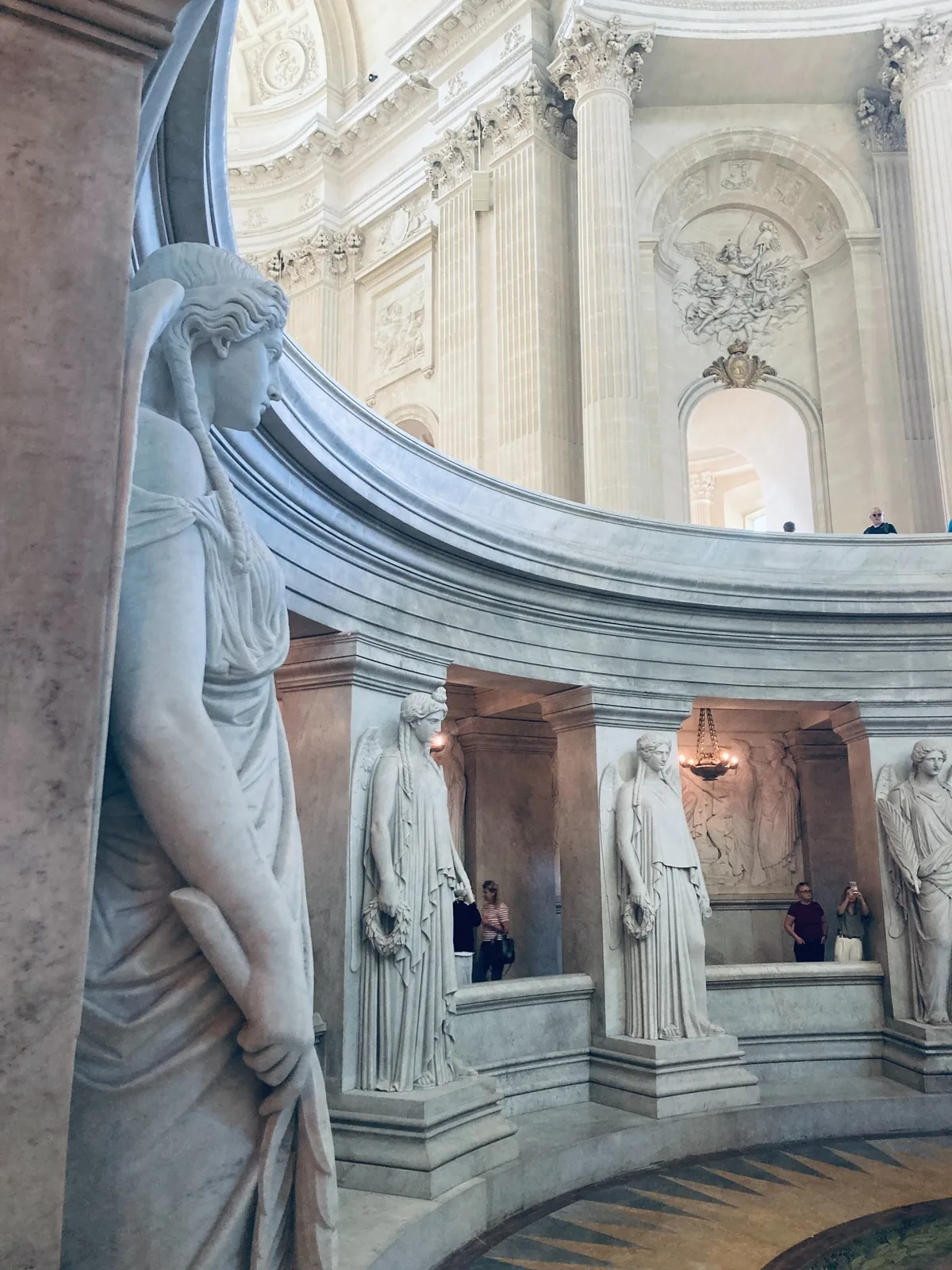
The whole space is beautiful, with the floor, walls, and everything being made out of marble, and I would definitely recommend you see it when in this area of Paris.
After your visit: a café and photo stop
Tip: When you are finished and would like something to eat, you can exit and turn up a street called Rue Saint-Dominique. I ate at a lovely bakery and coffee shop called Liberte, which had fresh sandwiches and treats, and yellow benches outside which are nice after walking for a long time.
On you way walking to it, there is also a great photo opportunity as you have the café Le Recrutement covered in flowers with the street leading up to the Eiffel Tower behind it, so definitely one to take a photo on it.
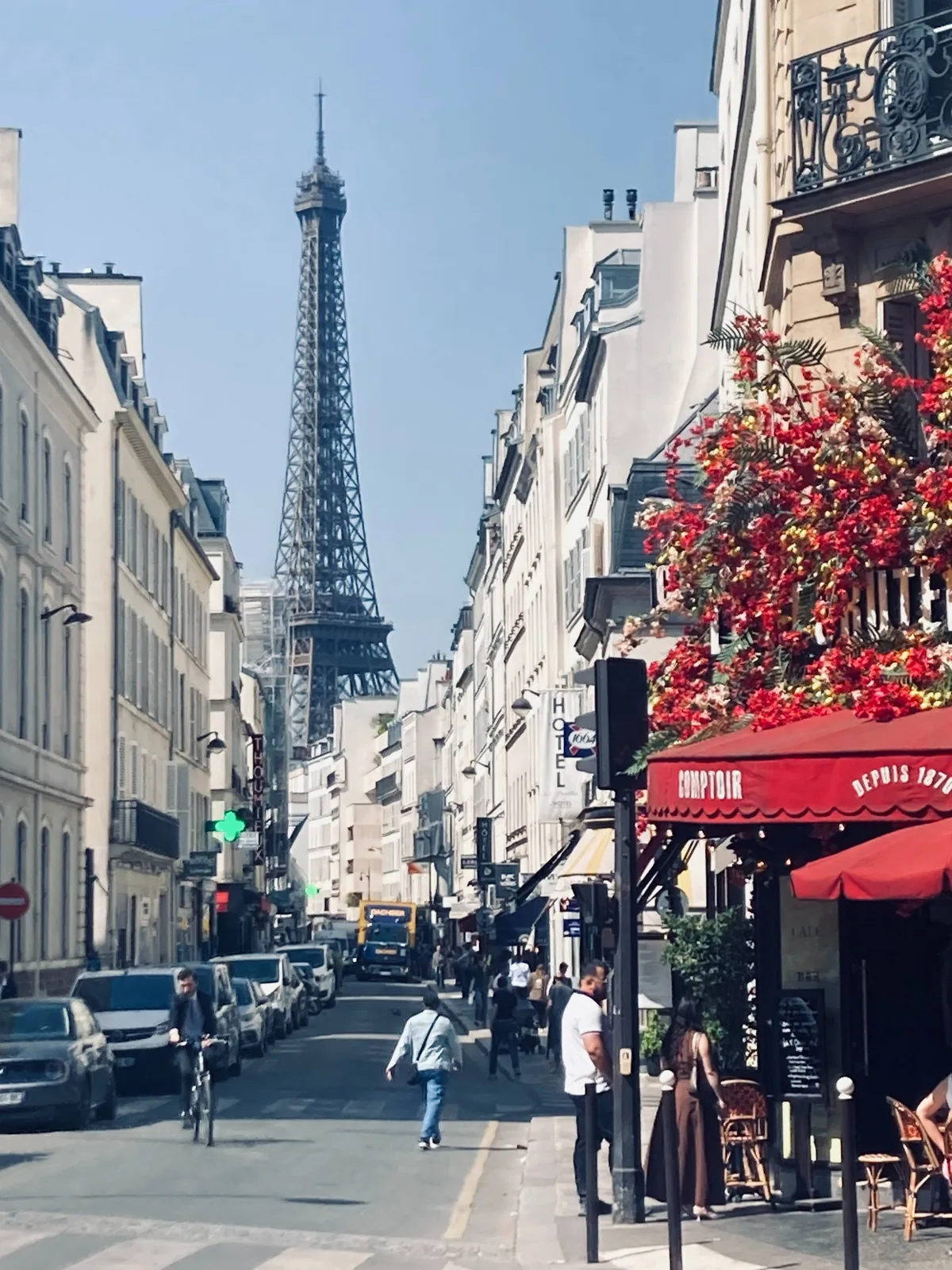
Hope you enjoy this site in Paris and enjoy your lunch after!!
If Paris is part of a wider European trip, you might also enjoy my Bruges in a Day guide, covering a lovely walking route around the historic Belgian city.
All photographs in this article are my own (© wordsfortravel.).
Enjoyed this guide?
Send it to someone who might be planning a trip, or save it for later.
KEEP READING
Continue exploring
More travel stories and practical guides from Words for Travel.