The itinerary
Paris riverside walking route
From Gare de Lyon to the Seine
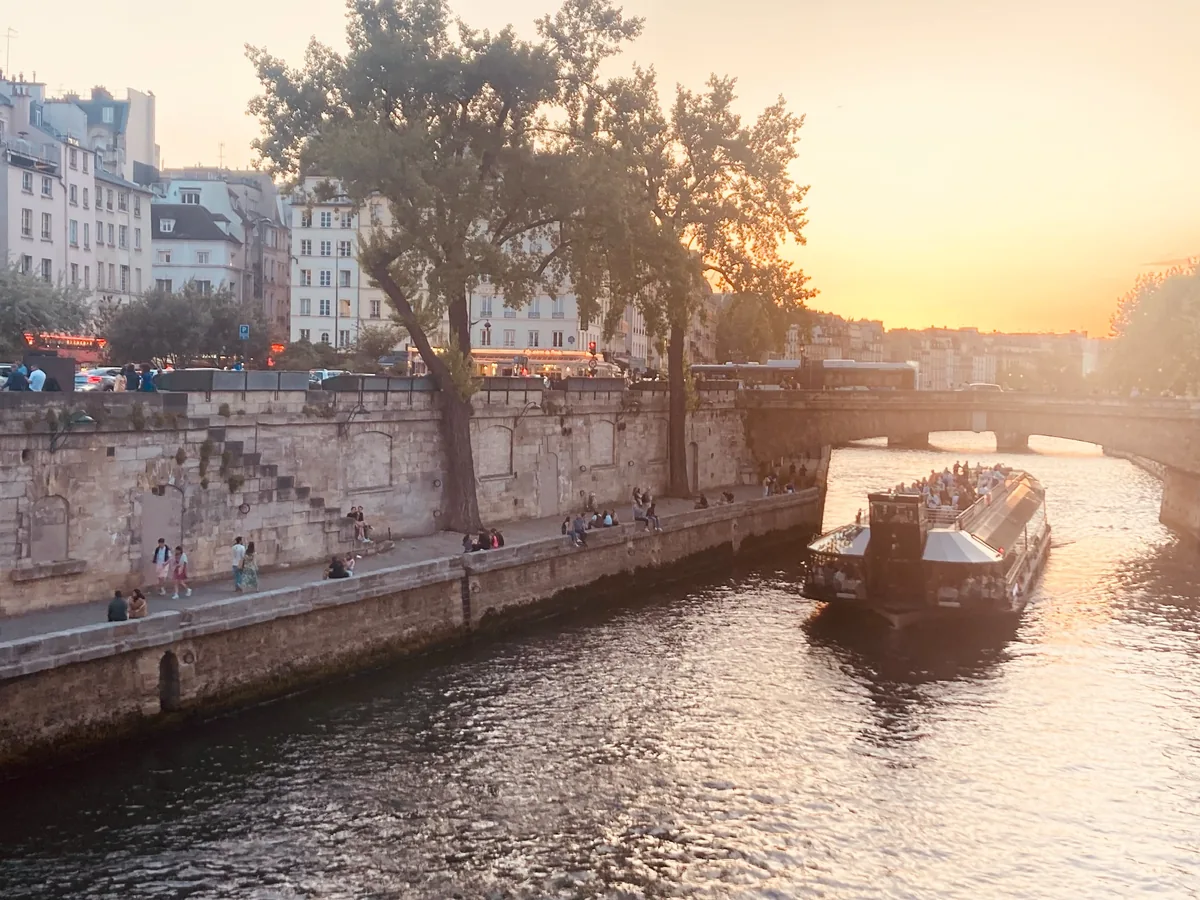
I was staying in Paris for three days last year at a hotel near one of the main train stations, the Gare de Lyon, so if you are staying near this area, this is a summary of my walk by the Seine to Notre-Dame Cathedral, and hopefully it will give you some ideas for a relaxing walking route for your next trip to Paris.
The walk from Gare de Lyon to Notre-Dame takes approximately 45 minutes without any stops, but I would allow around 1 to 1.5 hours to enjoy the scenery, gardens and photos along the way. You can also extend the walk to Place des Vosges in the Marais district, which takes another 20–30 minutes.
Pont d’Austerlitz and the Tino Rossi garden
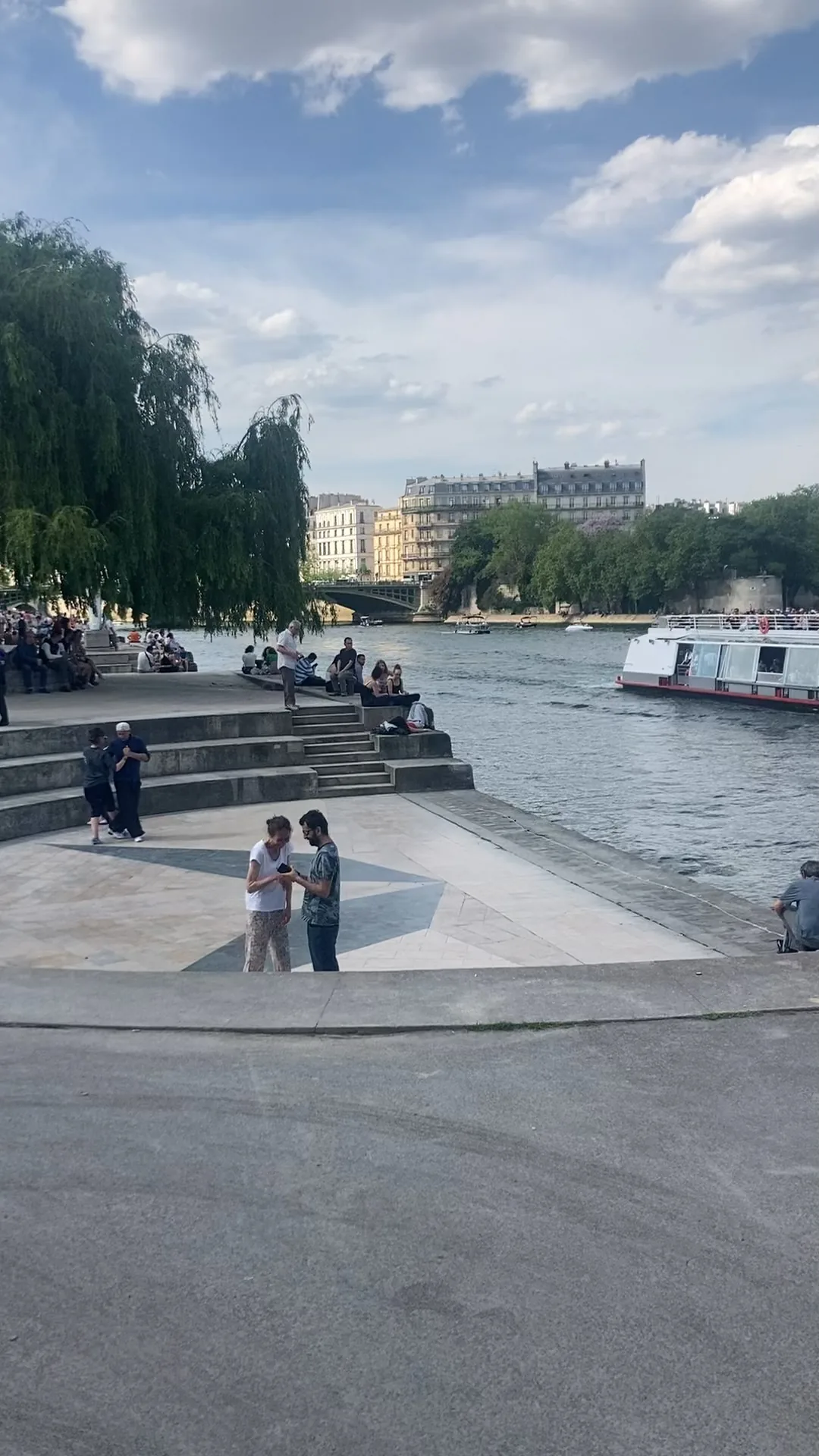
You first cross the Seine at the bridge called Pont d’Austerlitz, which is a stone arch bridge from the 1800s, originally opened in 1805 and rebuilt in 1854, which links the 12th arrondissement to the area near the Jardin des Plantes in the 5th arrondissement. There is a nice view up the Seine as you cross over. Once on the other side, turn right and you walk down a gentle slope to the Tino Rossi garden by the water. This park area was named after the Corsican singer Tino Rossi, and was built on the site of the former Port Saint-Bernard, which was used for the wine trade, with the garden being developed between 1975 and 1980. It has many open-air sculptures within it, forming an outdoor sculpture museum established in 1980. When I was there there were many people enjoying the sun, and in the small sunken stone amphitheatres you can see people dancing tango and salsa during the warm evenings, which really adds to the atmosphere as you walk along. I found it really nice to visit a place where the locals use the amenities well to enjoy living in the city. If you do fancy a boat tour, there is a stop for the Batobus there (Paris’ hop-on hop-off boat tour) at the Quai Saint-Bernard within the park.
Institut du Monde Arabe and Pont de Sully
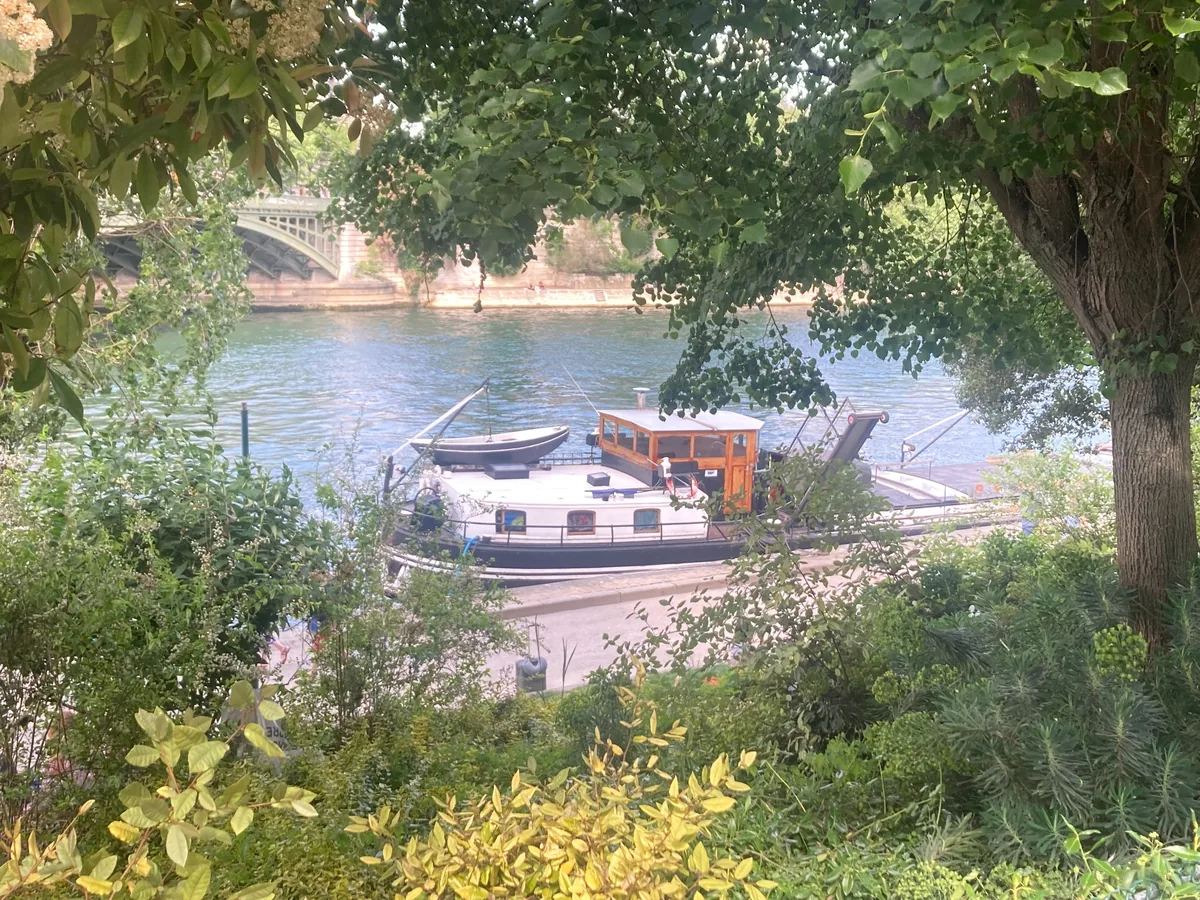
As you leave the park, you see the imposing Institut du Monde Arabe (Arab World Institute) building on your left, a striking modern glass-and-metal building, which was designed by a team led by architect Jean Nouvel and opened in 1987, and whose south wall is patterned after traditional Islamic latticework. You then pass by the Pont de Sully bridge which was built in 1876 at an angle from the eastern edge of the Île Saint-Louis. This is a good spot to take a photo of Notre-Dame further up the river, as it is one of its best unobstructed views.
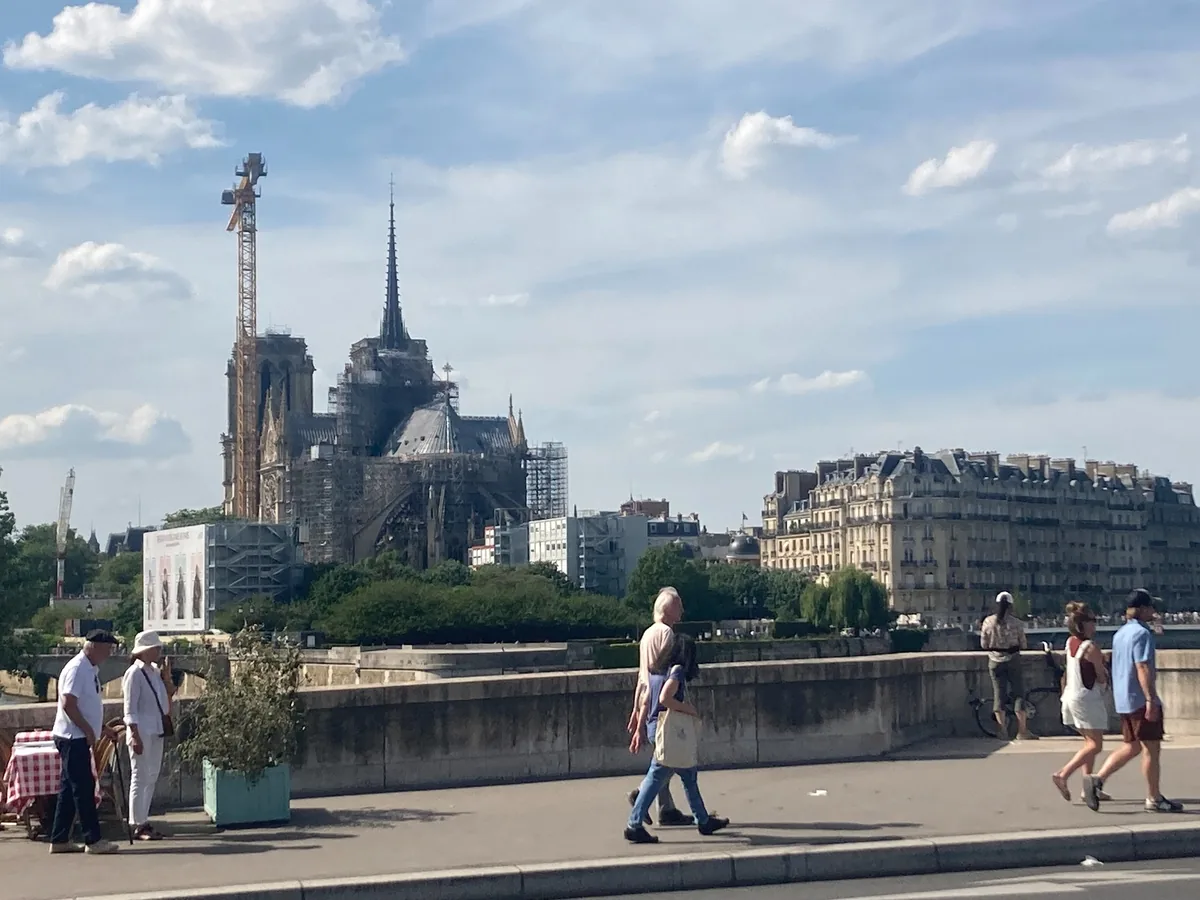
Quai de la Tournelle
As you then walk along the Quai de Tournelle, you see the historic buildings of the Île Saint-Louis sit directly across the water to your right. You can pass by shaded, leafy sections along the riverside, and you also see the famous green bouquiniste stalls lining the upper stone parapet selling vintage books and prints, which gives a really relaxing sense of being in the Paris you know from books and movies.
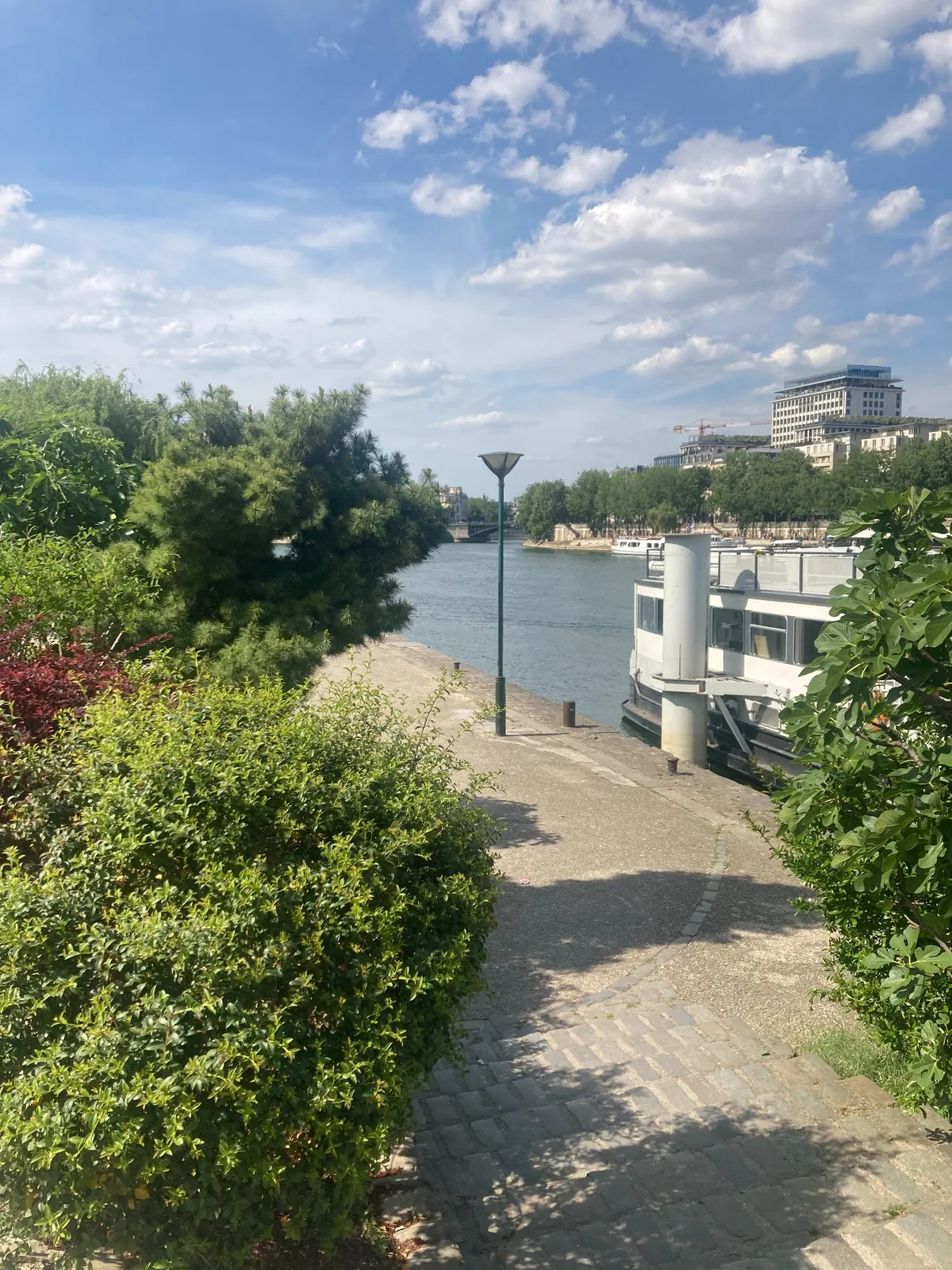
Shakespeare and Company and Notre-Dame
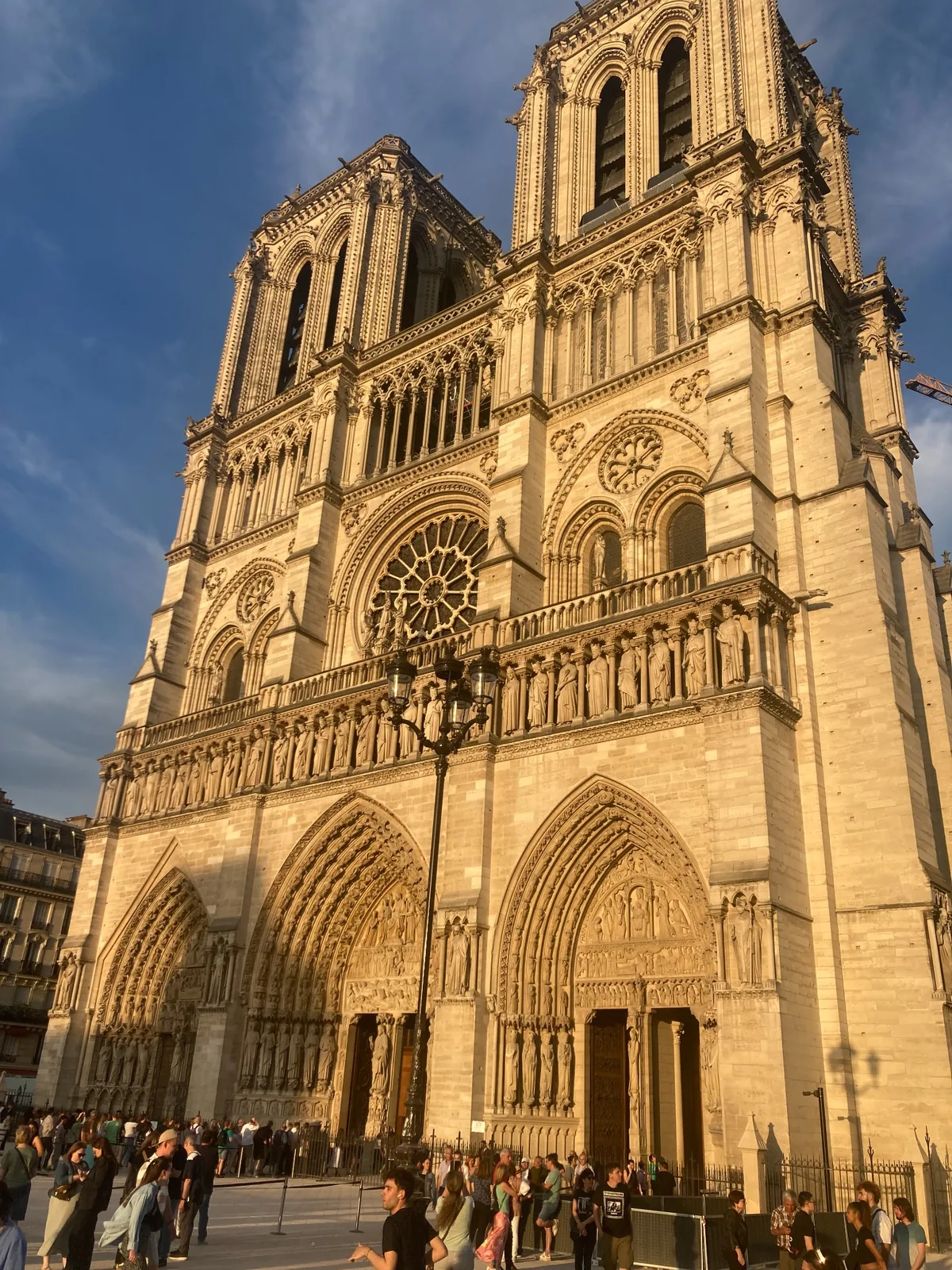
Continuing on the Quai de Montebello you pass by Shakespeare and Company, the famous English-language bookshop seen in Before Sunset (with Ethan Hawke and Julie Delpy), before the characters later board a boat in the movie. Just beside the bookshop is the small Square René-Viviani, which is a lovely garden with views of Notre-Dame and home to the oldest tree in Paris, a black locust planted in 1601, so it is nice for a little detour. You then have Notre-Dame Cathedral on your right and you can easily reach it by crossing the Pont au Double onto the Île de la Cité, the island where the cathedral stands. I’ll cover Notre-Dame and other Paris things to do in another guide.
The Marais and Place des Vosges
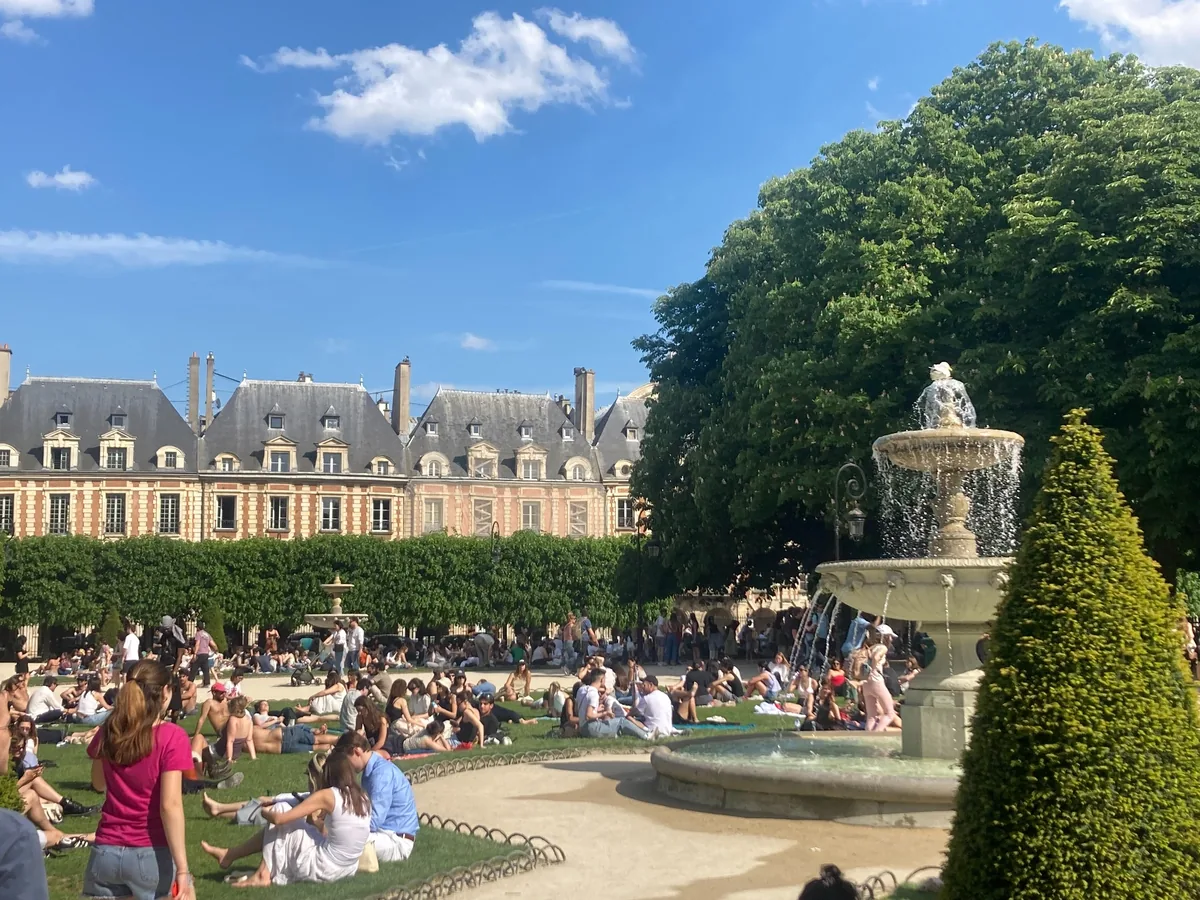
Tip: Once you have finished in Notre-Dame, and if it is a sunny day, I would recommend continuing across to the Right Bank of the Seine in the 4th arrondissement and taking a leisurely 20–30 minute walk past the Hôtel de Ville (Paris’ city hall) and through the Rue des Rosiers (the historic Jewish quarter) to the Place des Vosges in the beautiful Marais district. This is a peaceful tree-lined square with four fountains, surrounded on all sides by historic French buildings with beautiful architecture, and when I was there there were many people sitting, relaxing and eating on the grass around the square, creating a really nice atmosphere. So the best thing would be to pick up a freshly made baguette sandwich from nearby and relax in the park with a cold soft drink or some water.
By way of some history, it is the oldest planned square in Paris, and was built under King Henry IV between 1605 and 1612, and many famous French people including Victor Hugo have lived in the surrounding buildings designed with uniform red-brick facades with steep slate roofs and vaulted arcades. You can also visit Victor Hugo's former home at No. 6 Place des Vosges, which is now a museum dedicated to his life and work. It is now called Place des Vosges as it was renamed in 1800 in honour of the Vosges department, whose inhabitants were the first in France to pay their taxes that year.
Walking time
Walking time: Allow approximately 1–1.5 hours for the riverside walk from Gare de Lyon to Notre-Dame, including a few stops, and another 20–30 minutes to reach Place des Vosges through the Marais. With time to enjoy the gardens, take photographs and explore the area, this could easily make a very enjoyable half-day walk through Paris, especially on a sunny day when you have plenty of time. Enjoy the walk!
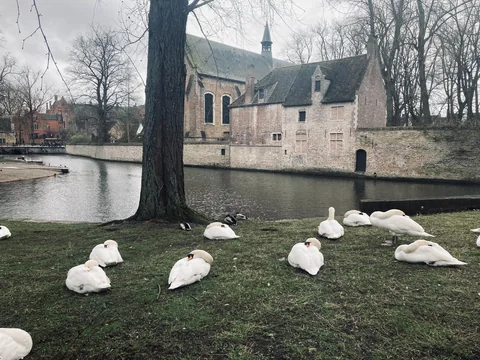
If you are travelling around Europe, you might also enjoy my Bruges in a Day: Tips & Walking Tour guide, following the canals, historic streets and beautiful squares of Bruges in Belgium.
Image credits: All Paris photographs in this article are by John-Henry Roche · © wordsfortravel.
Enjoyed this guide?
Send it to someone who might be planning a trip, or save it for later.
KEEP READING
Continue exploring
More travel stories and practical guides from Words for Travel.