The itinerary
Bruges walking route
Train from Brussels and walk into Bruges
While staying in Brussels, I decided to take a day trip, and from the options including Bruges, Ghent and Antwerp, I decided to visit the historic town of Bruges. If you leave from Brussels-Central station, it takes about an hour to get to Bruges on the SNCB-NMBS intercity trains. The trip is nice and relaxing and takes you through the Belgian countryside northwest towards the coast.
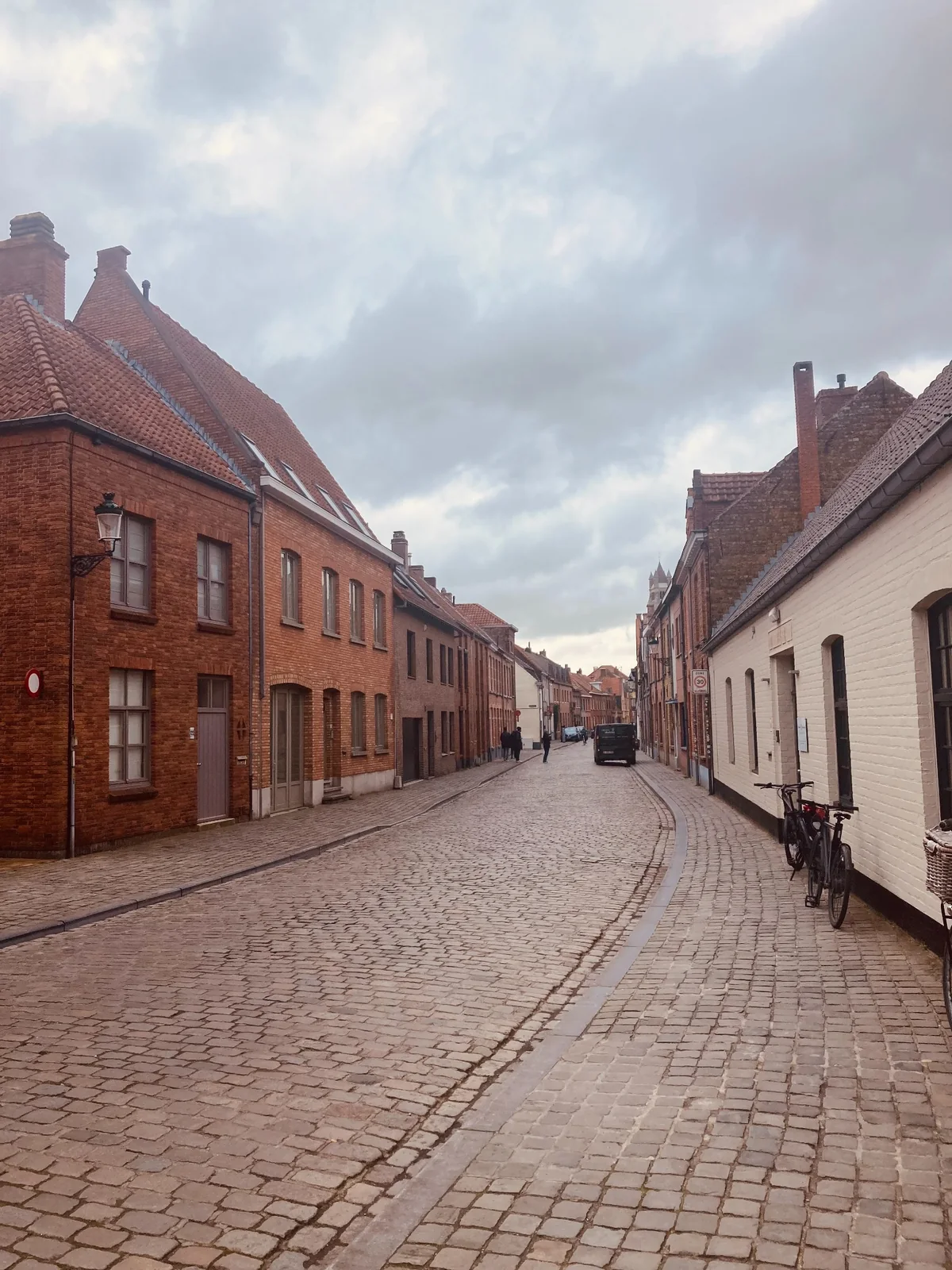
Once you arrive at Bruges train station, the historic city centre is very close by and within walking distance, so you do not need to take a bus or taxi. You can walk through the car park, cross over the R30 road at a safe crossing, and then start to walk up a pretty street called Oostmeers. It is a really nice introduction to the architecture of Bruges, as it has traditional brick homes on either side and leads you into the historic city centre area.
Saint Saviour’s Cathedral
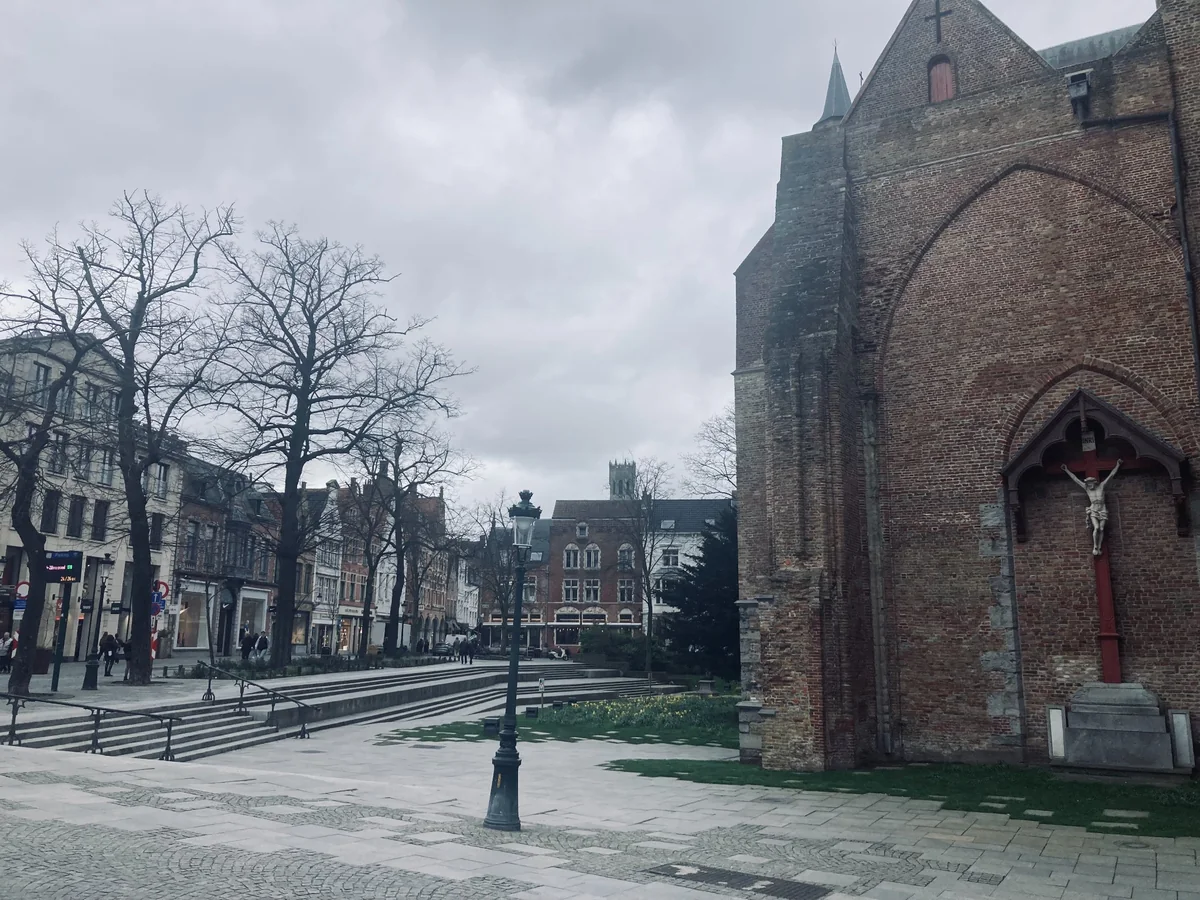
As you walk along Oostmeers for about 10 minutes, you come to Sint-Salvatorskathedraal on your right, before continuing towards Burg Square. This is the oldest parish church in Bruges and is famous for its fortress-like tower, with a neo-Romanesque upper section. As it dominates the skyline in Bruges, it is easy to locate. You can go inside for a quick visit and see its collection of beautiful 17th-century Brussels tapestries, a really impressive pipe organ and a striking architectural interior.
After a quick visit, you can continue towards Burg Square. There are shops in this area which sell Bruges food delicacies, like Bruges Swans (Brugse Swaentjes), Flemish waffles (topped with fresh cream and strawberries) and Belgian cuberdons (purple raspberry-flavoured candies with a gooey centre), so there are plenty of opportunities to get tea or coffee and a treat in a number of cafés which line this route.
Burg Square and the Town Hall
Once you walk into Burg Square, you have arrived at one of the most historic central places in Bruges. The square is comprised of the following buildings:
- Bruges City Hall (Stadhuis): This building was completed in 1421 and is one of the oldest town halls in the Low Countries. You can visit inside, which I have summarised later in this guide.
- Basilica of the Holy Blood (Basiliek van het Heilig Bloed): This unusual church is tucked into the corner of the square beside the town hall and is built as a two-level chapel, containing a revered medieval relic which is said to be a vial containing cloth stained with Christ’s blood.
- The rest of the square contains the Old Civil Registry, the Liberty of Bruges (where the judiciary and local administrative government previously worked) and a tree-lined open space where the medieval Saint Donatian’s Cathedral stood before it was demolished at the end of the 18th century, during the period of French rule. This area is a nice place to relax after walking, as it has benches you can sit on and a nice view over to the town hall and the rest of the square.
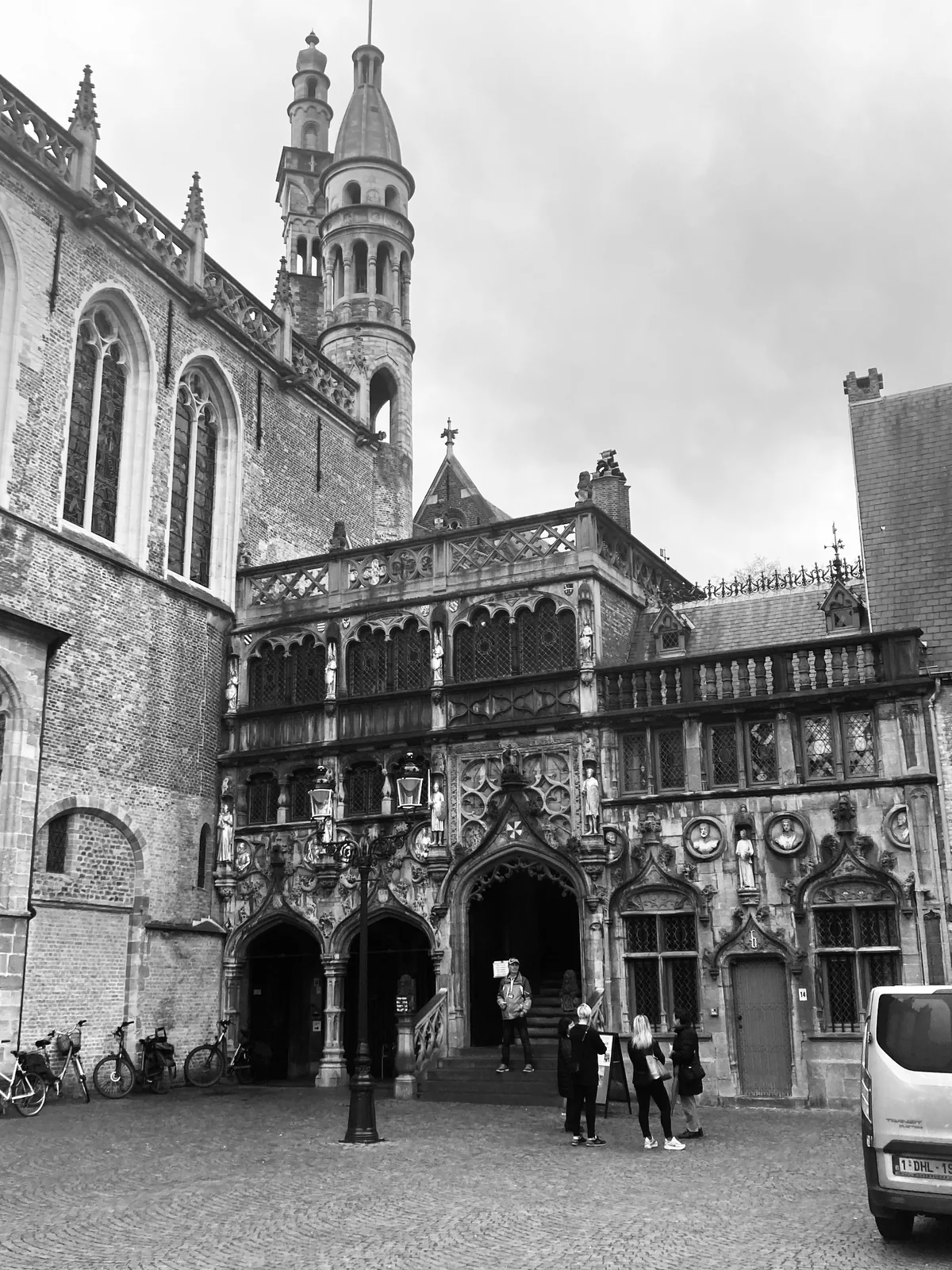
I went into the town hall when I was there and did the self-guided tour. The standard ticket is €8, and the opening hours are 9.30am to 5pm. As you enter, you see the ground-floor gallery, which has portraits of past rulers and kings, including a portrait of Napoleon. I really enjoyed visiting the Gothic Hall on the first floor. This is a beautiful room which has a 14th-century vaulted ceiling, as well as large, very colourful murals from the late 19th and early 20th centuries depicting defining moments throughout Bruges’ history. This room is definitely one for people interested in both history and art. In a room to the side of the Gothic Hall, you can hear about the maritime history of Bruges, which is presented in an interesting way using augmented reality models and physical artefacts on a main table to visually show how Bruges expanded over time.
If you get time, the Markt (Market Square), the main centre of Bruges, is only about 100m from Burg Square. It is nice for a quick walk around to see the vibrant, central main square with colourful guild houses and cafés lining it. The main building is the 13th-century Belfry tower, while the grand Neo-Gothic Provincial Palace sits on its eastern side, showcasing stunning architecture.
A nearby lunch option
Once I had finished at Burg Square and the Markt, I went to get some lunch nearby. I ate at a really nice gourmet steak and burger restaurant, which unfortunately has closed down in the meantime. However, after some research online, a place I would recommend is That’s Toast, an all-day breakfast/toast bar which is open daily from 8.30am to 4pm. It takes about 8–10 minutes to walk there from Burg Square and is located on a quiet side street called Dweersstraat, at number 4, just off the main shopping area. Items they have include savoury toasts, sweet breakfasts, big plates and lots of different tea and coffee selections. For a good-value lunch, with nice offerings, in a cosy place where you can sit at a table, it looks to be a good bet (around 4.8/5 on Google Reviews). However, I have not personally eaten there, so it is probably best to walk by, get a look at the food and how busy it is, and see if it would suit you first!
Rozenhoedkaai (Rosary Quay)
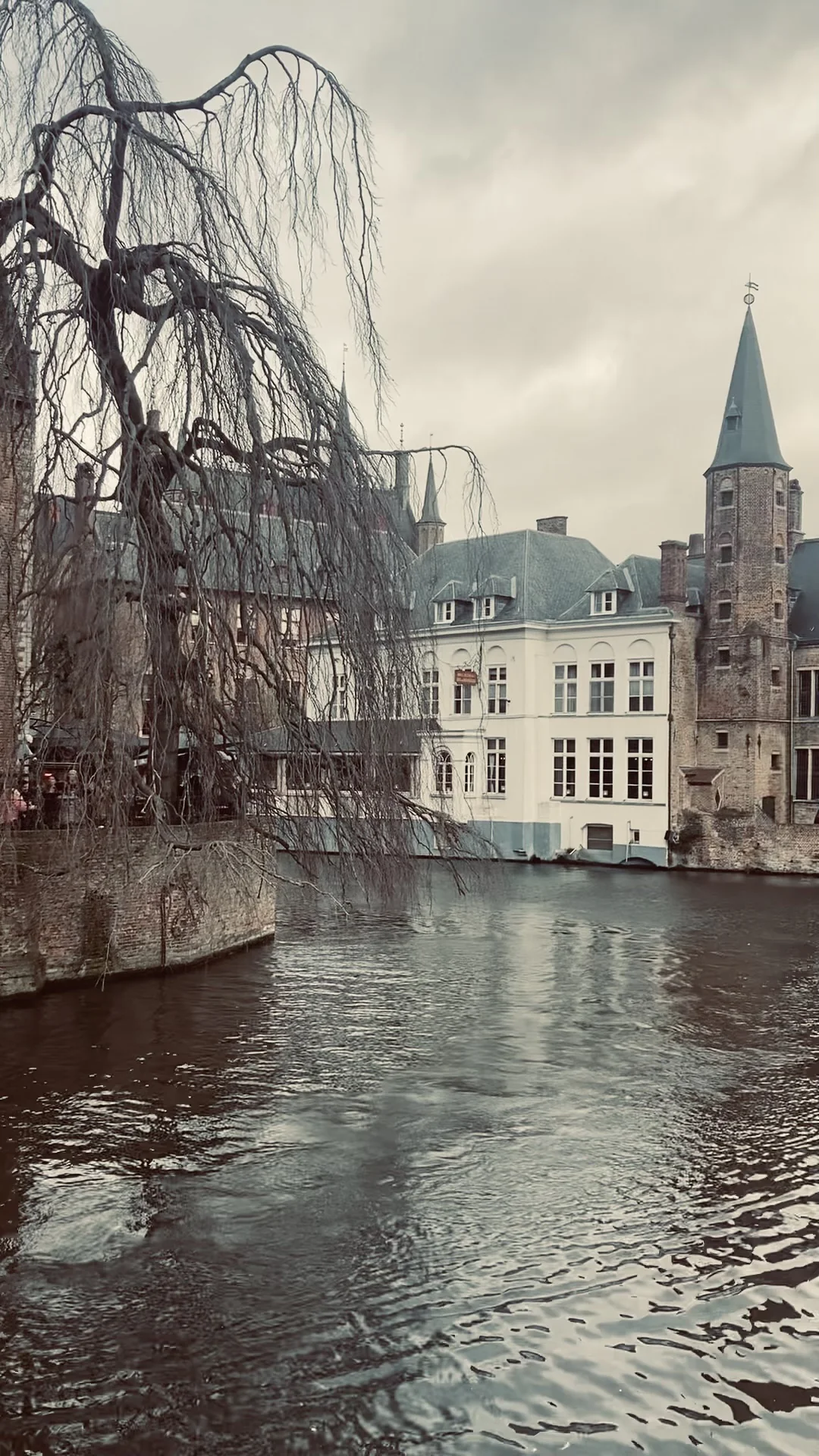
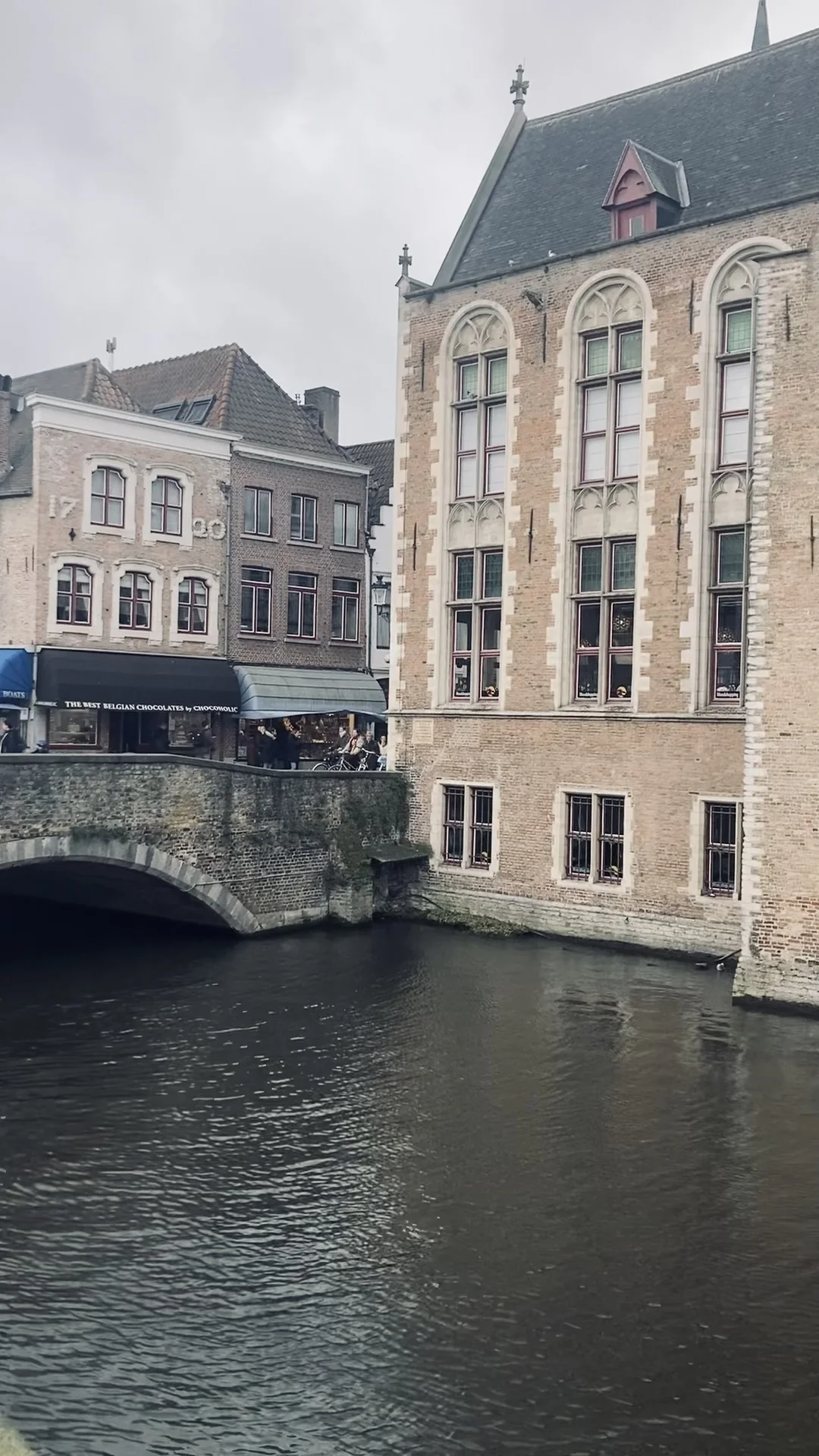
Tip: Ensure you pass by the Rozenhoedkaai (Rosary Quay). Located between Burg Square and the Groeningemuseum, this is one of the most photographed spots in Bruges, and I found it stunning and great for photos. It is beautifully positioned where the canals bend around classic brick buildings, with the Belfry overlooking the scene in the background.
Groeningemuseum
After lunch, I walked back through the lovely side streets and next stopped at the Groeningemuseum, a small, compact municipal art museum built on the site of the medieval Eekhout Abbey. It houses Flemish and Belgian paintings from six centuries, including some beautiful Flemish Primitive artworks from the 15th and 16th centuries, and includes works by masters like Jan van Eyck and modern artists such as Marcel Broodthaers. It is a really nice stop-off for about an hour if you are a fan of art and want to get inside for a while. Admission is €15 as of November 2026.
The Groeningemuseum is scheduled to close on 11 January 2027 for approximately four years of refurbishment. Highlights from the collection are due to be displayed at the new BRUSK exhibition venue from March 2027. Check Visit Bruges before planning your visit.
Church of Our Lady
As you continue the route back to the train station, you can visit the Church of Our Lady (Onze-Lieve-Vrouwekerk), which features a 115.5-metre brick tower (one of the tallest brick church towers in the world). Inside, you can see the beautiful “Madonna and Child” (the Madonna of Bruges) by the renowned Italian artist Michelangelo.
Beguinage and the Lake of Love
As you continue your walk back, a must-visit area of the town is the Beguinage, a green, wooded section beside the canal which historically was founded in the 13th century as a small community for the beguines, who were independent, pious laywomen (unmarried or widowed) who lived communally, worked together and followed their own rules without taking strict monastic vows. The buildings and grass lawns are beautiful, pictured against the canal, with boats passing by, and it’s nice to relax and watch the swans and other birds by the canal bank. The area has some beautiful buildings, including the Church of St. Elizabeth.
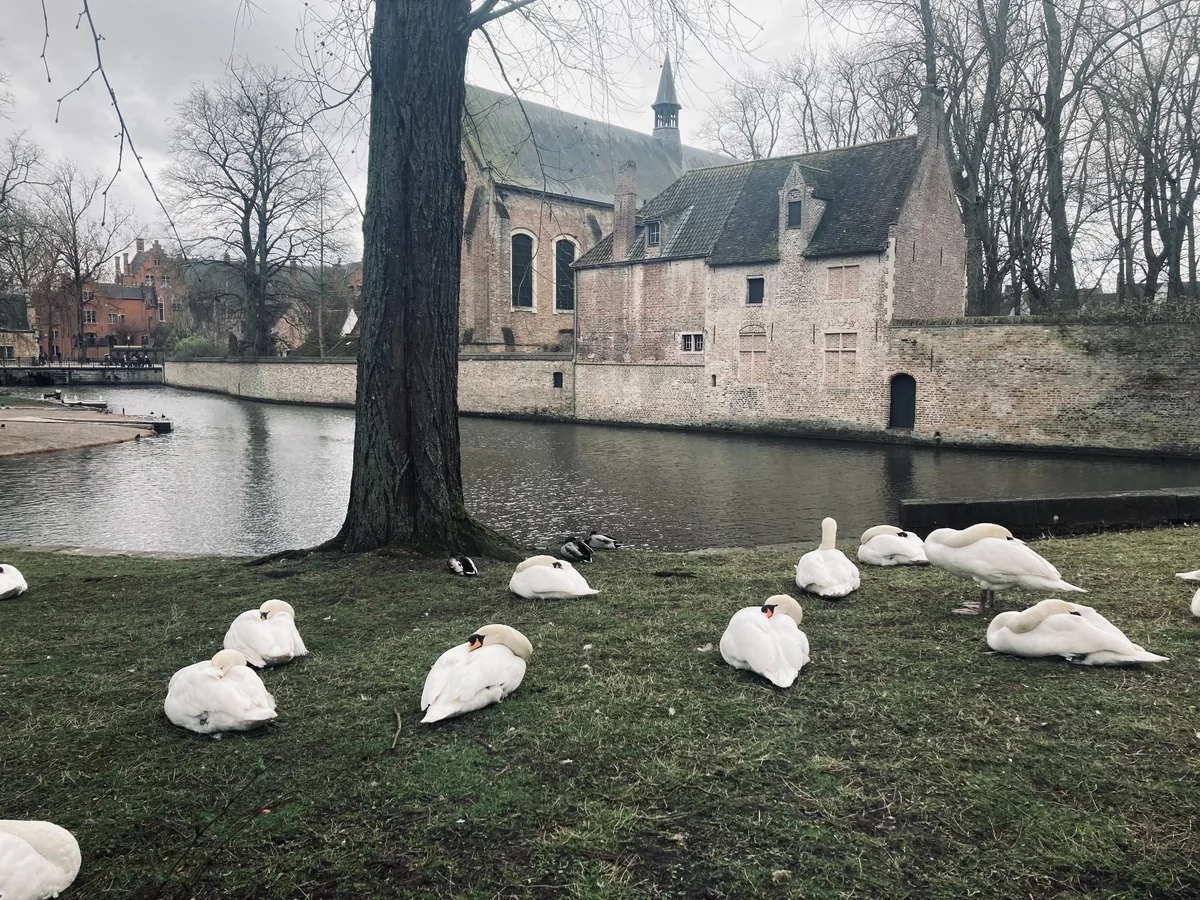
The train station is another 10–15 minutes’ walk away, past the Lake of Love, which has a lockhouse and bridge near where Bruges’ swans gather, and you can return to Brussels from there in the evening (or to wherever you are going).
Hope this guide gives you a good summary of what to do over a 4- to 5-hour day trip to the historic areas of Bruges. Allow extra time if you plan to visit the museums and churches, stop for lunch and take photographs.
The town centre is walkable from Bruges railway station. Check SNCB-NMBS for current trains, and check opening hours before travelling. City Hall admission was €8 and Groeningemuseum admission €15 in November 2026.
The Groeningemuseum is scheduled to close for refurbishment from 11 January 2027; its collection highlights are due to move to BRUSK from March 2027.
Image credits: All photographs in this article are by John-Henry Roche · © wordsfortravel.
Enjoyed this guide?
Send it to someone who might be planning a trip, or save it for later.
KEEP READING
Continue exploring
More travel stories and practical guides from Words for Travel.