When staying in Dublin, if you want to take a day out of the city and see more of the coast, a great option is taking a train to the coastal town of Monkstown in South County Dublin, which is only 20 to 30 minutes away, and enjoy the experience of being by the sea in a historic coastal town on the outskirts of the city.
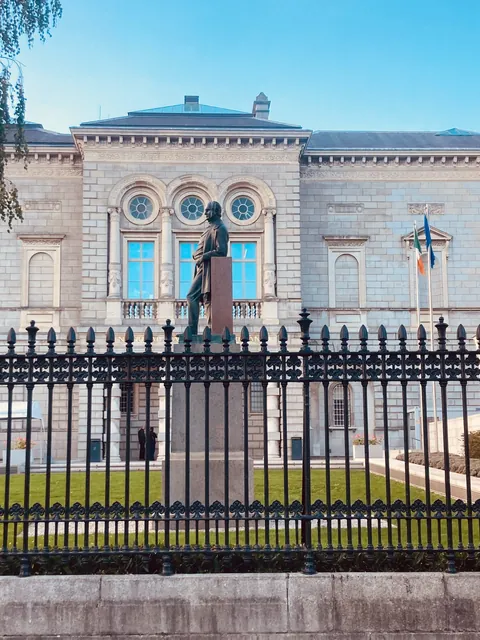
If you are also exploring Dublin city centre, you can read my National Gallery of Ireland afternoon guide for another idea.
The itinerary
A Monkstown coastal walking guide
Getting There:
To get there, the best and most scenic option is to take the coastal railway called the DART (Dublin Area Rapid Transit), a train line which connects north Dublin towns like Howth and Malahide to as far south as County Wicklow, with 32 stops across the network.
If you are getting the train from Dublin city centre, you can choose to get on at Connolly Station (North Dublin city), Tara Street Station (beside the River Liffey), or Pearse Station (South Dublin city).
A return paper ticket costs €5.20, whereas if you have the Leap travel card, it costs €4.00, and the price is the same for all three stations as they are all in TFI Dublin Zone 1.
Tip: I would recommend buying a Leap card (at shops or stations) if you intend to use Dublin transport (Dublin Bus, Luas, DART, Iarnród Éireann commuter rail) during your time in Ireland, as topping it up is very convenient to save time later and it costs less long term (up to approximately 30% cheaper). Just remember to tap on and tap off at the station gates and validators so you do not end up spending more than you planned (e.g. the maximum fare).
Once you board the DART heading south (it will usually have Bray or Greystones as its destination), it takes about 8–10 stops and about a 20–25-minute journey to get to your destination of Salthill and Monkstown.
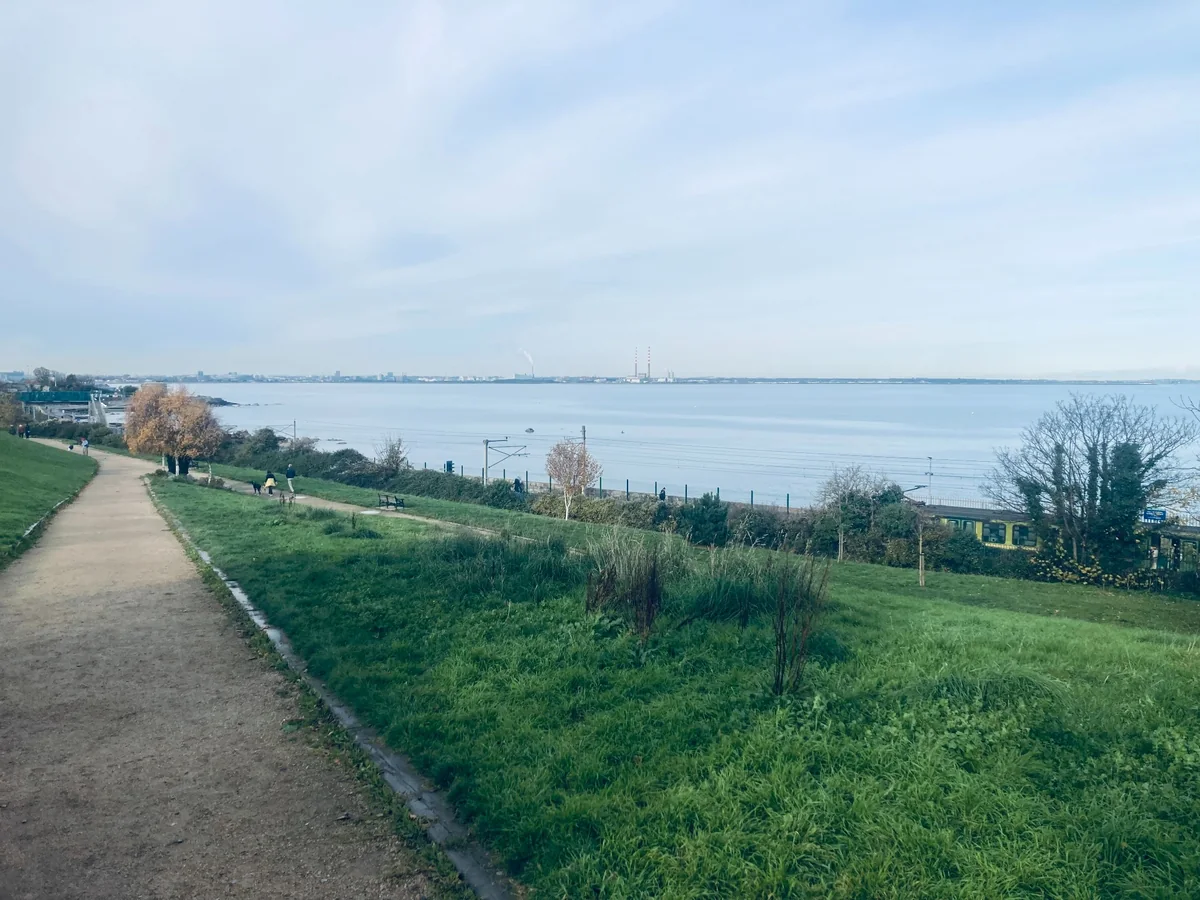
I would recommend sitting on the left-hand side of the train if you can, as the sea view is spectacular when you go past Sandymount Strand, the large beach between Sandymount and Blackrock stations. If you look over to the top of the beach, you can see the red and white striped Poolbeg chimneys, a key symbol of Dublin. These were originally built as exhaust flues for an oil-fired electricity generating station on the site. Additionally, you can see the outside of the Aviva Stadium, home of Irish football and rugby, at Lansdowne Road station.
When you arrive:
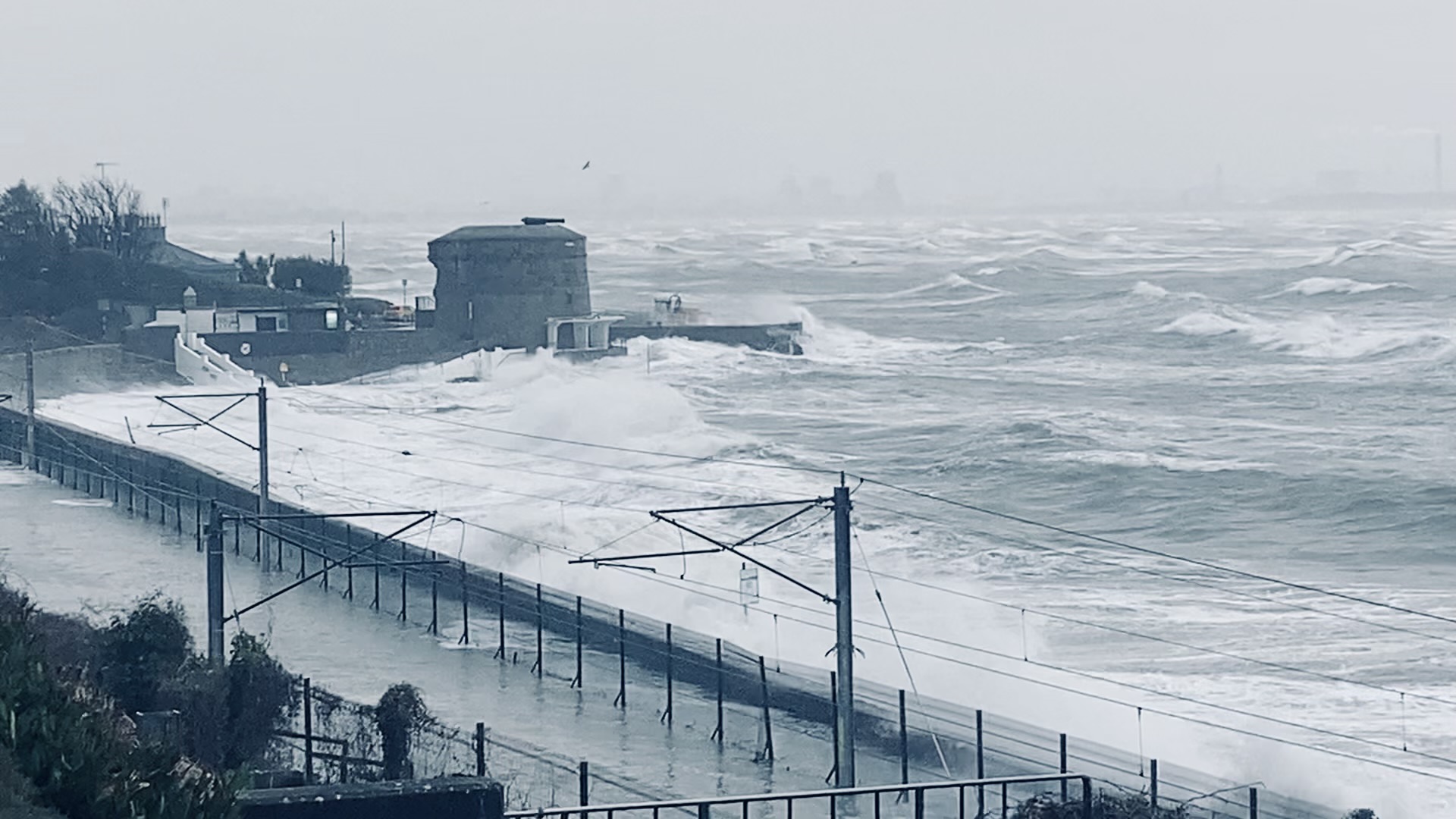
As you depart the train, you exit onto the platform beside the sea. If you look back a little, you can see the Martello Tower at Seapoint, one of several historic circular stone fortresses along Dublin’s coastline which were built around 1804–1805 to defend Dublin Bay against a feared Napoleonic invasion. If you visit during the summer and it is a warm day, many people swim here, so be sure you bring togs and a towel! When you leave the station, you can walk up into Monkstown Village past the beautiful period terraced homes on the sea road.
Monkstown Village:
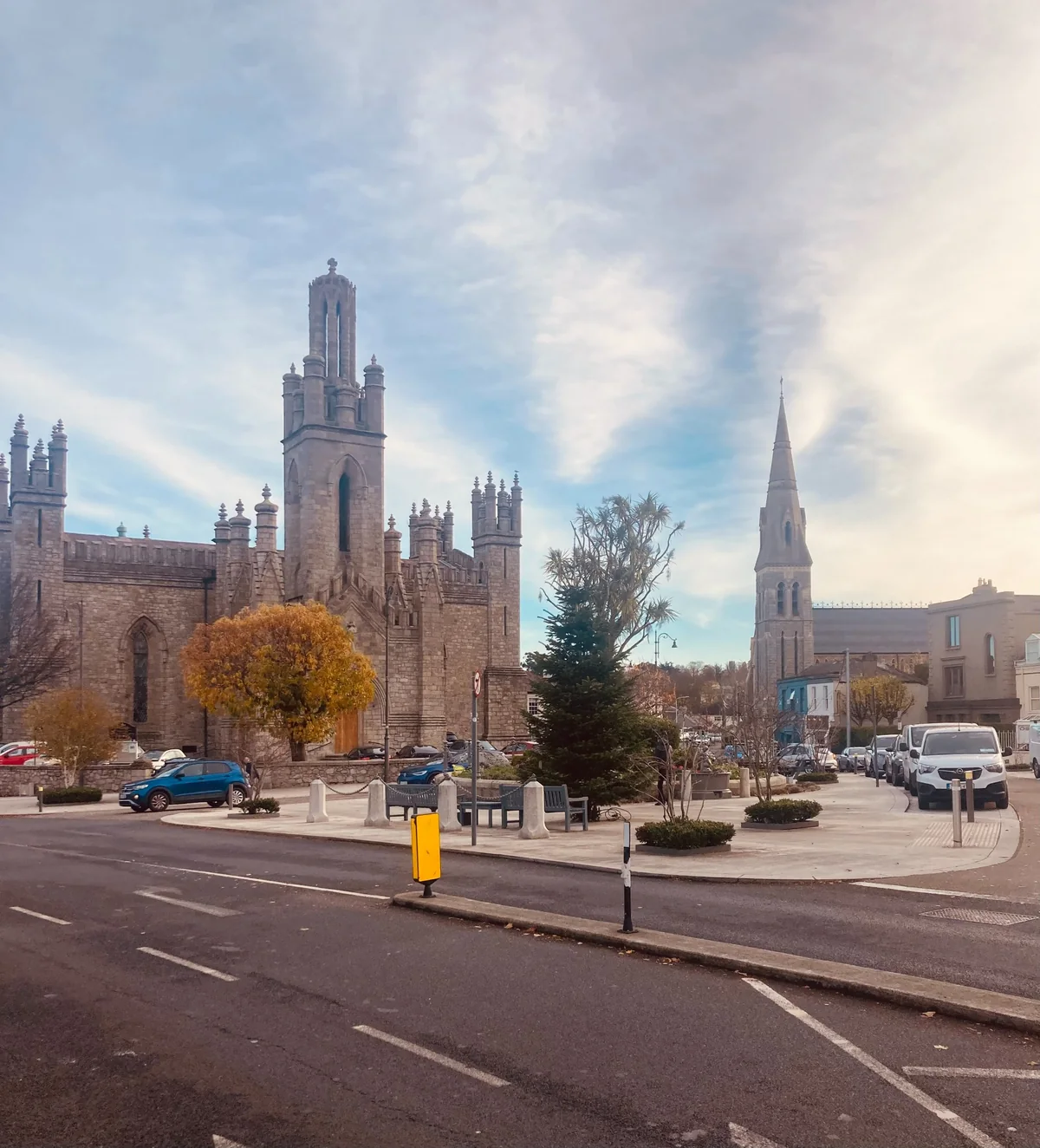
Monkstown is dominated by the large Church of Ireland church in the centre. It was designed by architect John Semple in the 1830s, and the building's architecture is famous for blending Gothic Revival and Moorish/Saracenic styles. It is a working parish church so may be closed to visitors outside of services, but it can occasionally be open for a visit during concerts, service times or during Heritage Week in mid to late August.
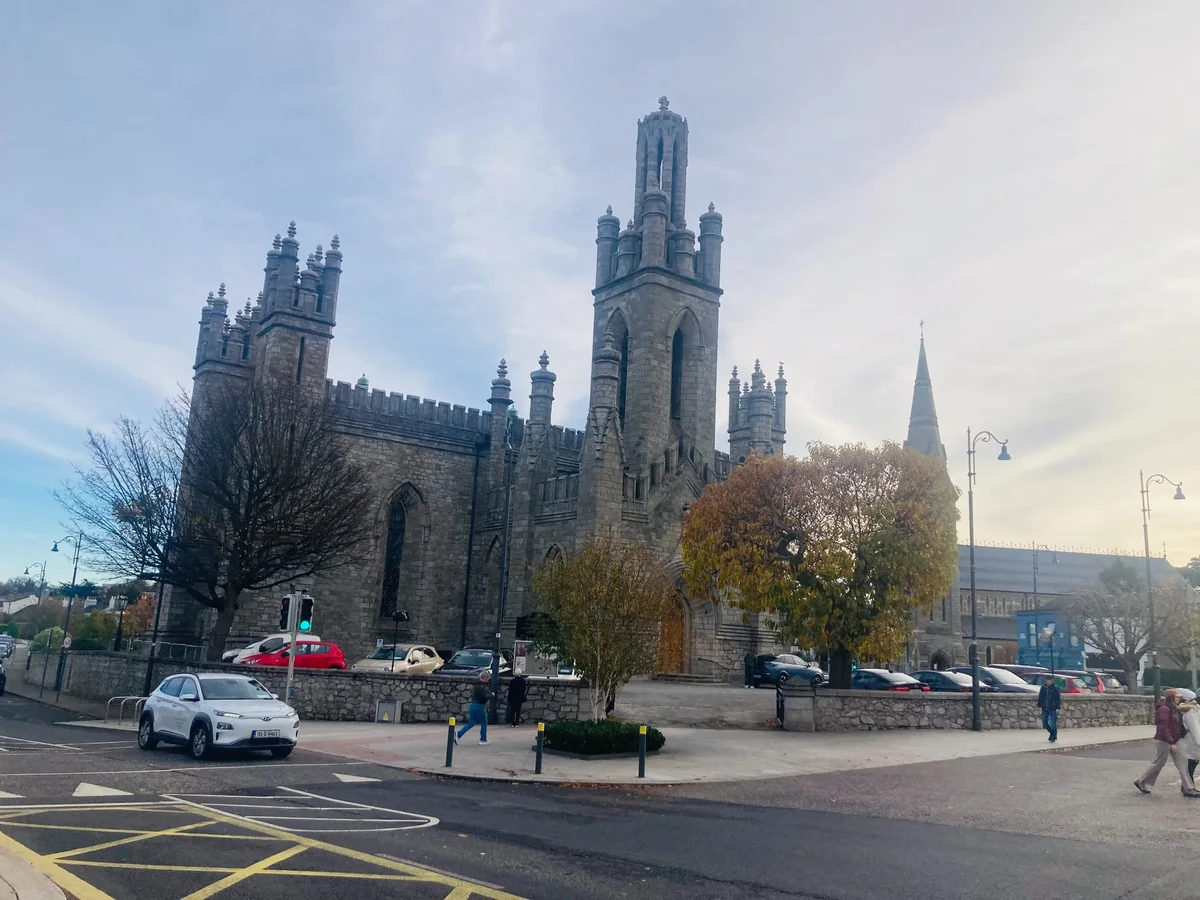
Across the road from it leading away from the village is St. Patrick's Catholic Church, a grand Victorian Gothic church, built in the 1860s (with the spire added in the 1880s).
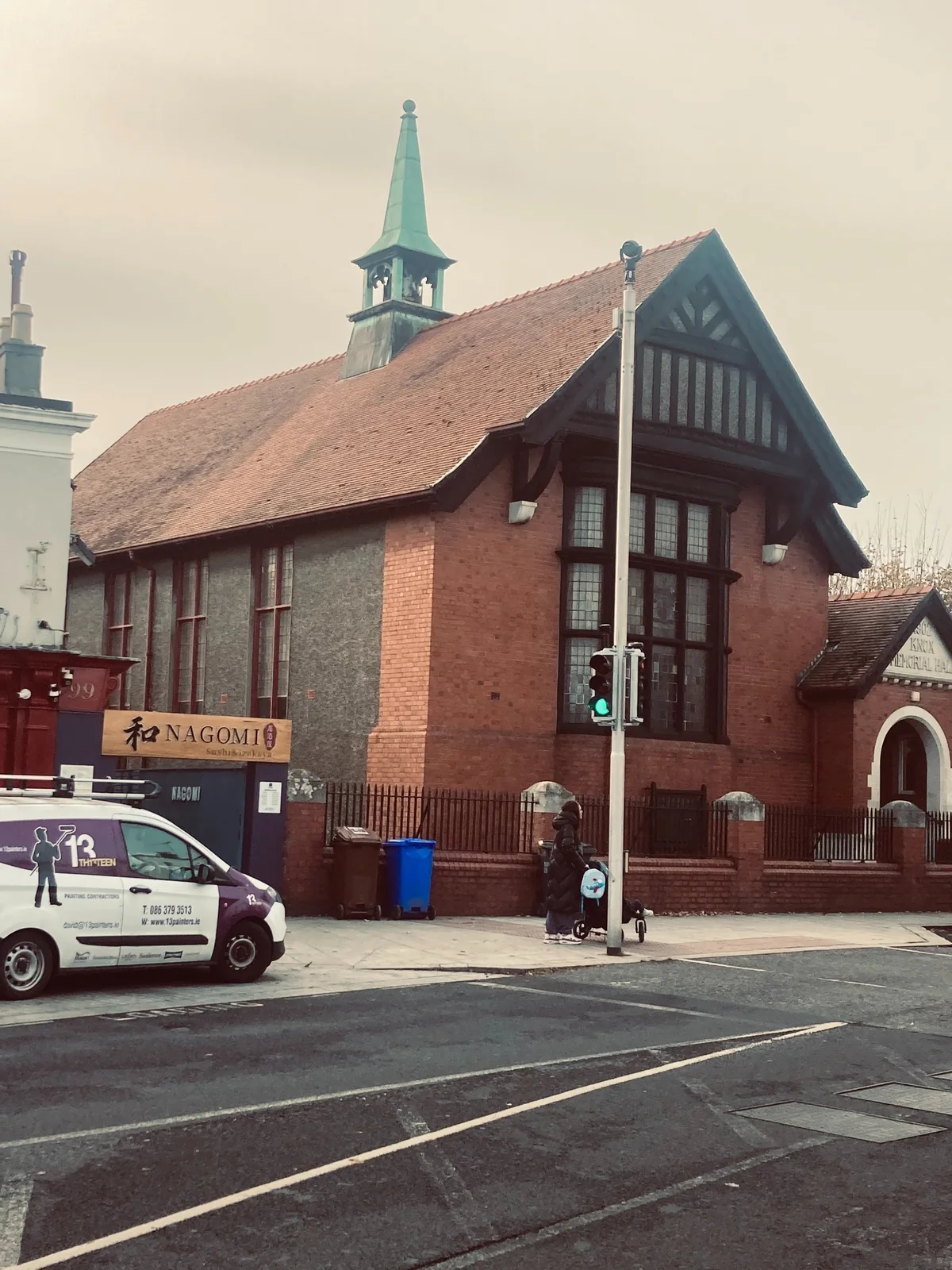
Another beautiful building is the Knox Memorial Hall towards the Monkstown Road exit of the village. This building was commissioned in 1904 by Mrs. Alice Chaloner Knox in memory of her husband and nephew as a building for the community, and for over a century served as the local parish hall for the Church of Ireland. The beautiful design includes a Ruabon red-brick façade, Tudor-style half-timbered gable, and a bow window featuring stained glass which contains the Knox family coat of arms.
Once you have seen the main buildings within the village, you can walk down Monkstown Crescent, the pretty row of shops beside the main church. This comprises fifteen early-19th-century houses which have largely been converted into small retail businesses, cafés and restaurants.
If you would like a speciality coffee, you can choose between Café de Journal (indoors) or Avoca (terrace and indoor seating), while 8a is perfect for an early lunch (especially during the summer when they have outdoor seating). I’ll summarise dinner options later in this guide.
Once you have had refreshments, a walk around the many period homes in the area is very relaxing and takes about 15 to 20 minutes.
Just to add that Monkstown has very limited public toilet facilities so ensure you take the chance to use one when visiting a café or restaurant. If you also like shopping, there are several good stores in Monkstown Crescent covering fashion, food, floristry and wine, which you can visit.
Walk:
Continue down Monkstown Crescent till you take a road to the right leading up into a leafy road called Sloperton. Here you walk up a sloped hill past De Vesci Tennis Club on your left and a beautiful garden square with De Vesci Gardens up to the left. An interesting fact is that the green garden area in the middle is private and access is restricted to residents and keyholders. As you reach the top of this hill, you follow the road to the right and walk past the Vesey Public Park to the left.
Finally, you walk further up Knapton Road, in my view one of the prettiest roads in Dublin. Named after the 18th-century Baron Knapton, which was the title of the local de Vesci landlord family, the road has many grand Victorian and Edwardian red-brick villas and period terraces, with many situated in their own grounds.
At the top of the road, you exit onto Mounttown Upper, where you see the St John the Evangelist Church opposite you, which was built in 1860 in a granite Gothic Revival style.
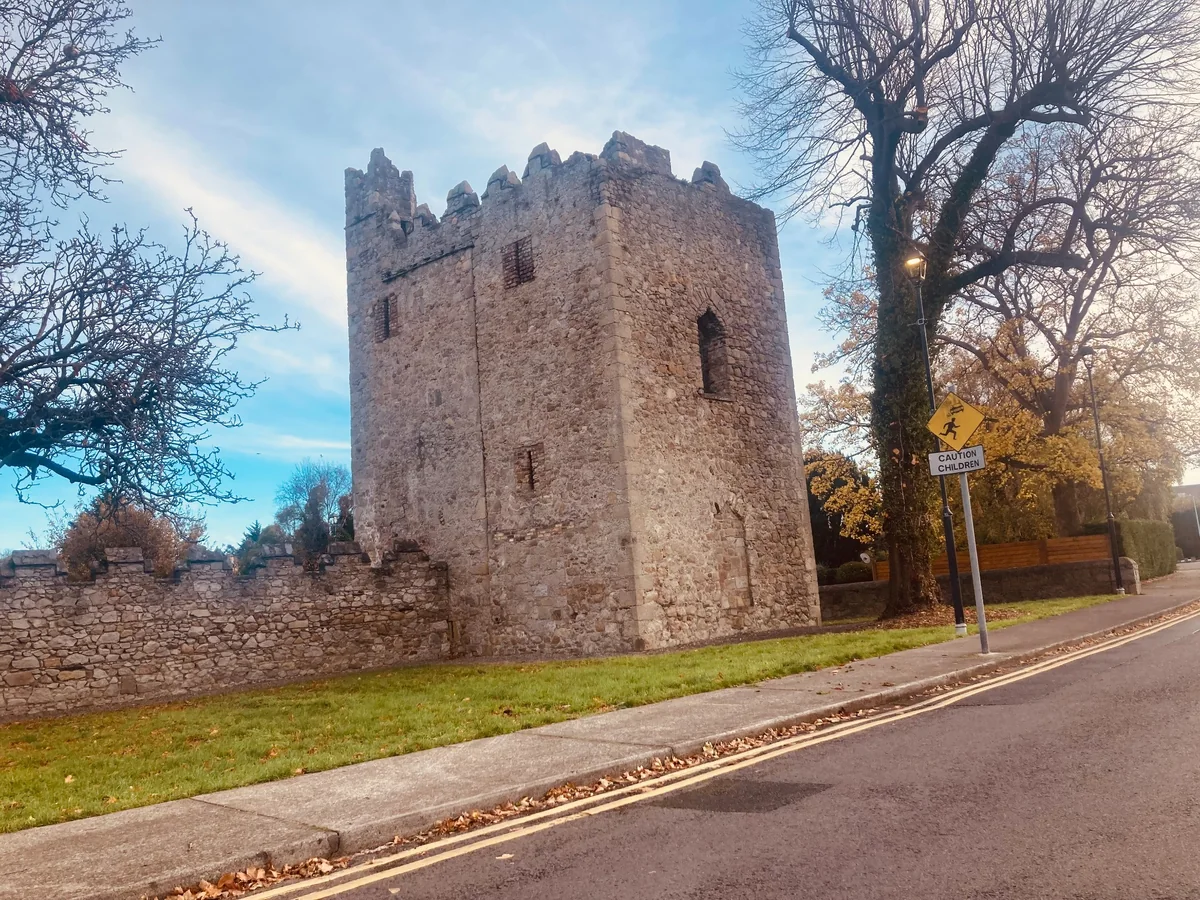
If you turn right and make your walk down to the bottom of Mounttown Upper hill, you see the ruins of Monkstown Castle, a tower house built around the 15th or 16th century by the Cistercian monks of St. Mary's Abbey to protect their lands. After the dissolution of the monasteries, it passed to Sir John Travers and later the Cheevers family. The castle was subsequently occupied by Edmund Ludlow during the Cromwellian period before returning to the Cheevers, who sold it to Archbishop Michael Boyle. Boyle's son, Viscount Blessington, enlarged the castle, but by the end of the 18th century it was allowed to fall into decay as the surrounding lands became more valuable for housing. You can walk up to it and there is a sign detailing a short history of the castle, and you can walk around it.
As you then cross to the other side at the roundabout to make your way down the hill, you can see into Carrickbrennan churchyard (which adjoins CBC Monkstown school), which is believed to have been a religious site since the 6th century, and features the ruins of a 1668 church that was later modified to include a watchman's house to deter body snatchers.
It is also known for being the burial site of a 1798 rebellion leader, Joseph Holt, and victims from local Dublin Bay shipwrecks.
As you make your way down back into Monkstown, you pass by the Religious Society of Friends meeting hall on your right, which has been in use since it was built in 1832. If you feel like a coffee or a stop before returning into Monkstown village, you can get a coffee at Pine Cone Coffee, which opened in 2024 in the shop where Hewetts newsagent was positioned for many years.
Dinner:
If you wish to have dinner in Monkstown, there are a huge number of options. For something special, I would recommend the following three options:
- Bresson: A French-inspired restaurant on Monkstown Crescent, opened in 2018 by chef-patron Temple Garner in a converted former coach house. The food is really good and is locally sourced.
- FXB: A renowned steak and seafood restaurant, famous for its dry-aged Irish beef, fresh oysters, a really good burger, and popular Sunday roasts. If you want a drink before your meal, it has a fun bar upstairs called Frank’s which does really good cocktails.
- China Song: This is a Cantonese restaurant (formerly called China Tang) which opened in 2025 and is well known for its authentic dim sum, Xiao Long Bao soup dumplings, and Peking duck, which should be ordered in advance. I have not personally eaten here yet, but the review I read for it in The Irish Times confirms the food is excellent.
If you prefer a quick meal which is less expensive, there is That’s Amore, which is a family-run Italian restaurant across in the other series of shops on the square, with a really good atmosphere, and I have also heard Nagomi is very good, which is the Japanese restaurant a few spots down.
The village’s main pub, Goggins, has been closed for a while but is scheduled to reopen on 1 December 2026.
Another pub nearby is The Purty Kitchen which is about a 5-minute walk in the direction of Dún Laoghaire on the coast road.
Final Ideas:
If you still are OK for walking, you can walk further out of Monkstown and cross over to a harbour wall called the West Pier (opposite the East Pier in Dún Laoghaire) which you can walk along. It has beautiful views of Monkstown, Dún Laoghaire and further back into Dublin.
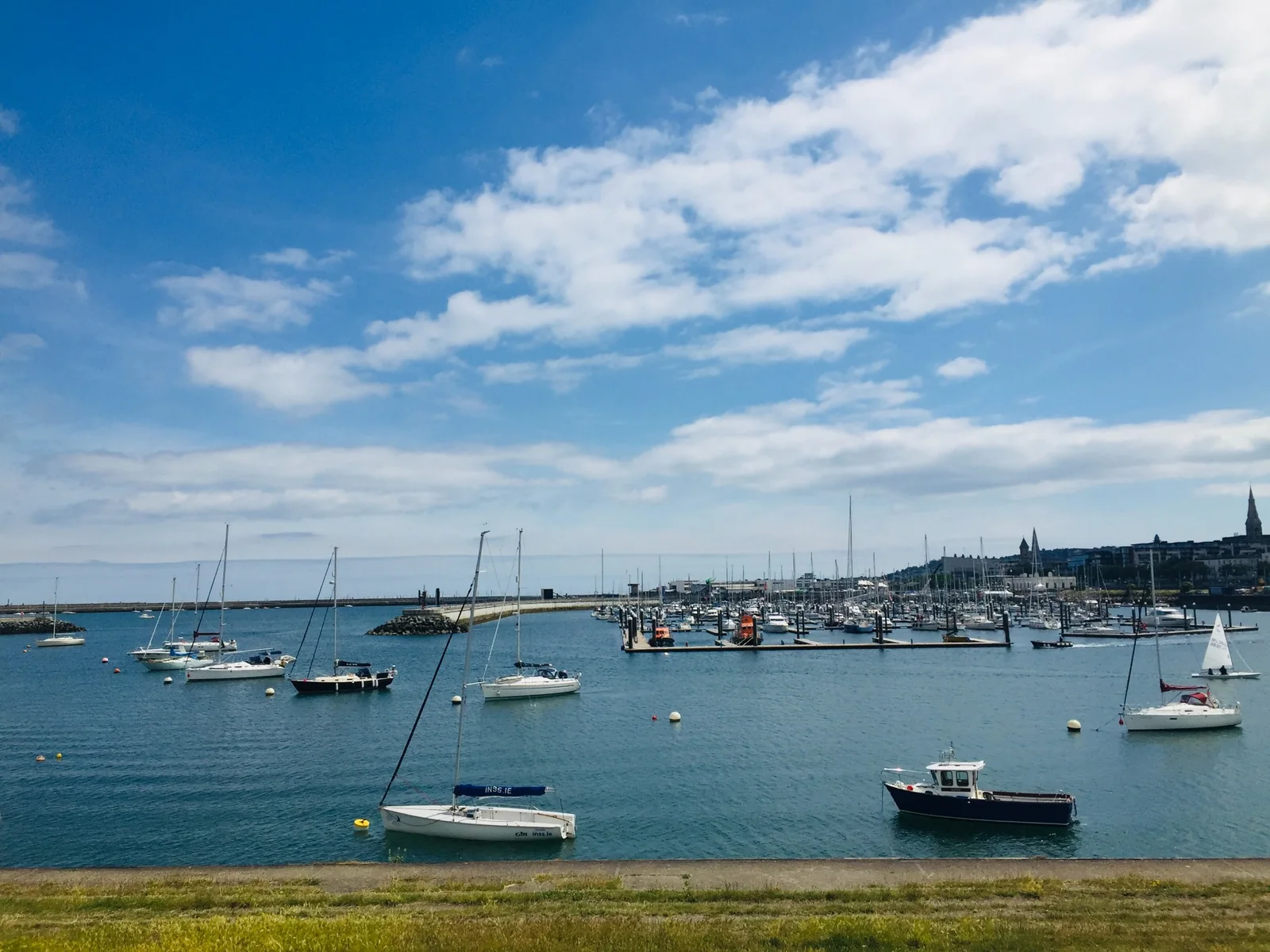
To walk to the end and back usually takes about 30 to 40 minutes at a brisk pace. Just to note it is more exposed and has a rougher surface than the East Pier, so ensure you have suitable clothing and footwear.
Tip: If you have the time, two other beautiful places further down the line are the historic village of Dalkey, and Killiney (which has a beautiful beach and a hill with amazing views over South Dublin), but I feel this guide for Monkstown has enough for you to cover one afternoon.
Once you have finished your trip, you can return to the DART station and make your way back into Dublin at a leisurely pace. Hope you enjoy this day trip out of Dublin during your trip!!
If you are packing for a short trip, see my short-haul flight packing guide and checklist.
Image credits: Original Monkstown and Dún Laoghaire photographs supplied by the author.
Enjoyed this guide?
Send it to someone who might be planning a trip, or save it for later.
KEEP READING
Continue exploring
More travel stories and practical guides from Words for Travel.