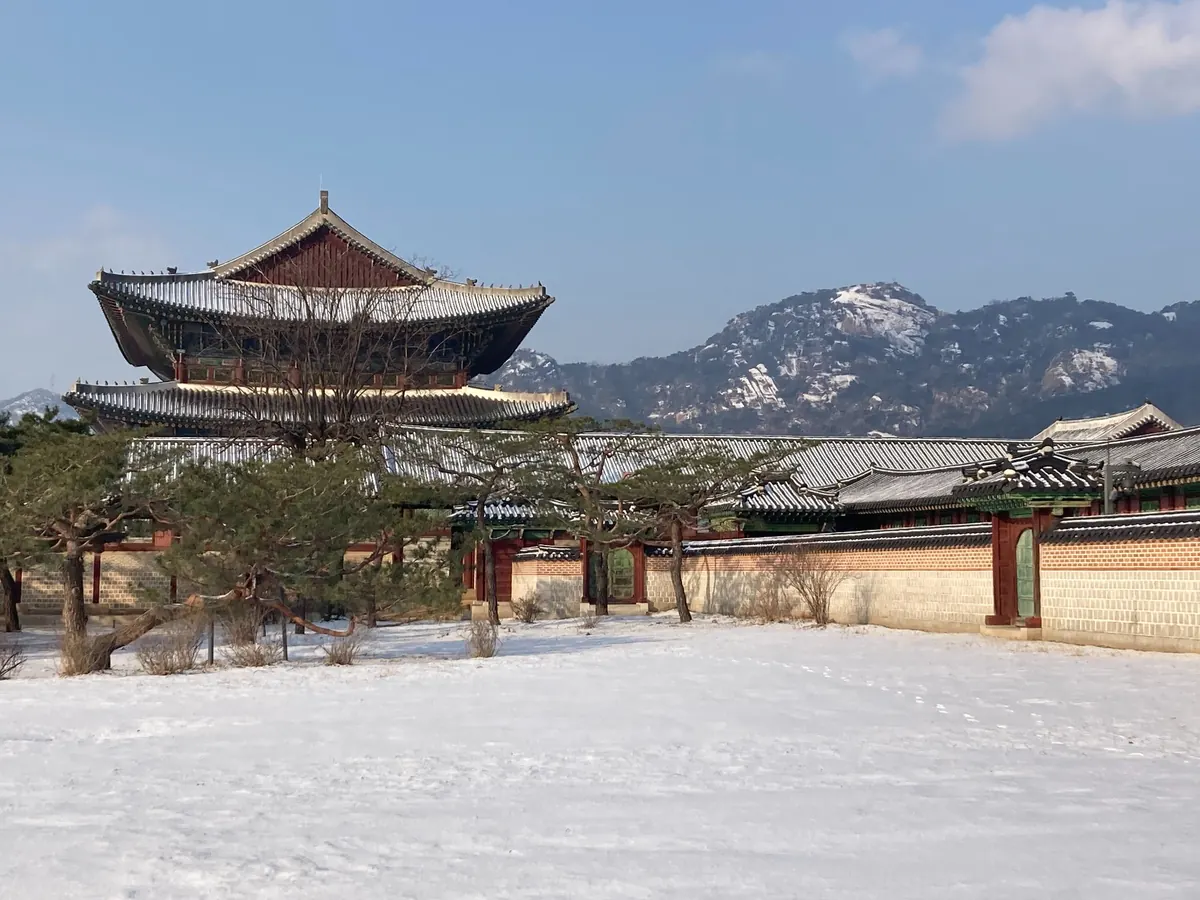
Seoul is a really interesting place to visit in winter, especially as the cold weather and snow add a different quality to your experience than if you visit during spring or summer. This is a 3-day summary of a stopover trip I took to Seoul two years ago, and covers everything from how to get around, things to see and do (both historical and current) and how to make the most of your time, and I hope it helps give you some ideas for your trip. I’ll be doing a blog of my summer trip there last year shortly, which will give other places to experience and visit as well.
The itinerary
Day 1
Afternoon · How to arrive in Seoul and navigate your way around
Arriving at Incheon Airport and taking the AREX
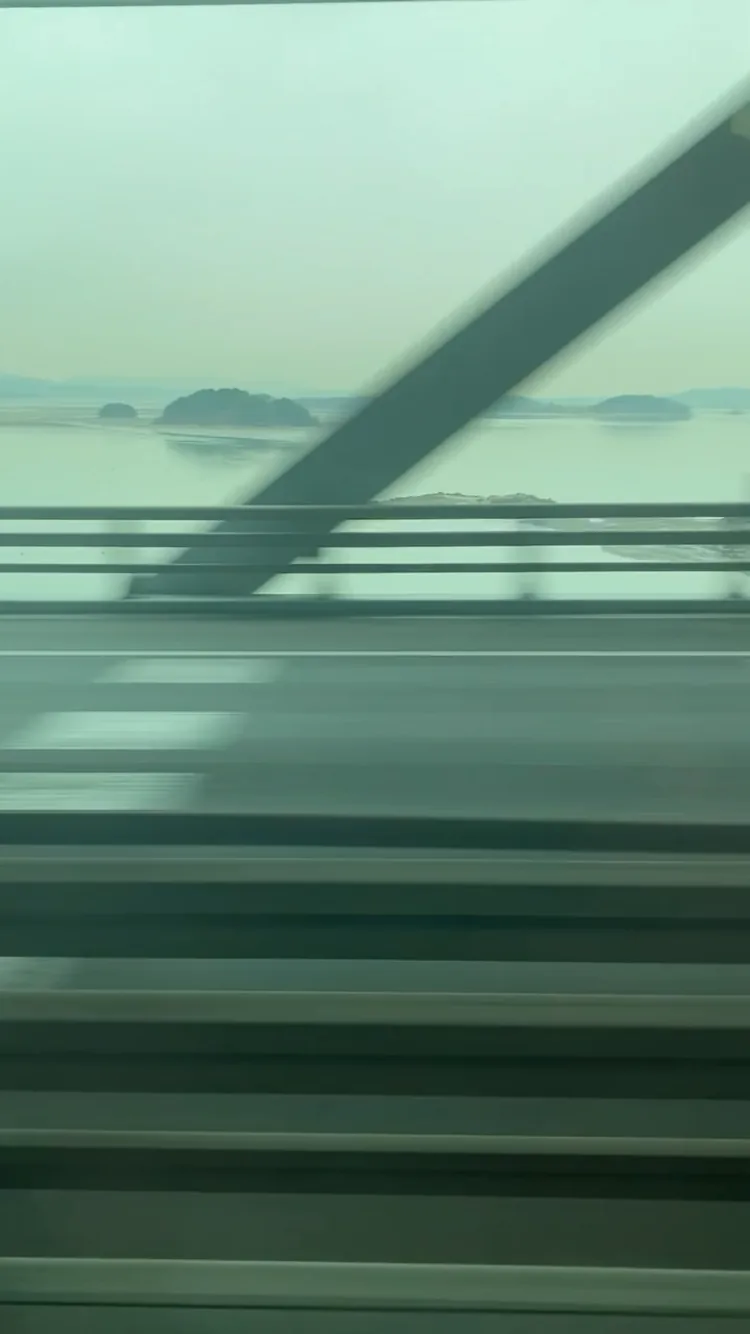
I arrived at Incheon Airport in mid-December excited for my three-day trip as part of a stopover. Incheon is on a small island, about 30 km from the centre of Seoul, so you need to take transport from the airport. I decided to take the AREX train and really enjoyed the view of the islands as you go over the Yeongjong Bridge, and make your way over the Han River into Seoul. One initial word of warning – I turned on my 4G on my phone for a few seconds to see where the train’s position was on Google Maps and immediately used up all of my monthly data, so I would recommend an eSIM or only using Wi-Fi during your trip – much cheaper!
Seoul Station, Yongsan and Itaewon
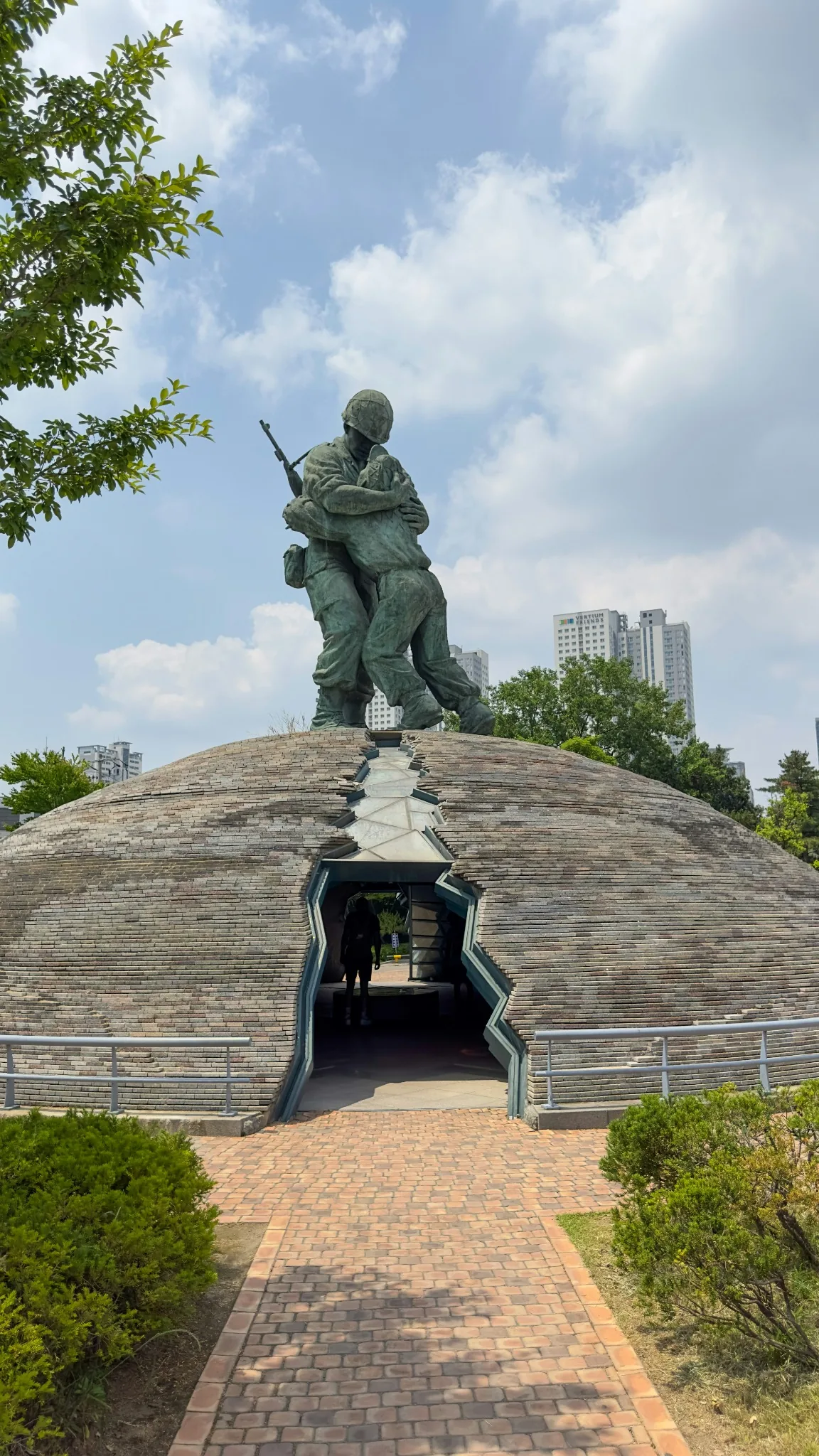
The AREX takes you to Seoul Station, which is the main transport hub in Seoul. I was staying in Yongsan, about an hour on foot, so I decided to take the Seoul Underground. The easiest option is to use a T-money card, which you can buy in any convenience store and then top up, so I purchased one and tried to locate the platform. The Underground signs in Seoul are in English and Korean, and it takes a bit of time to fully navigate, but once you are there for a day or two it becomes very straightforward. I took the subway from Seoul Station and exited at Samgakji (about a 20-minute walk from my hotel) to save me switching lines. As you walk up the hill heading towards Itaewon, it was interesting to see the War Memorial of Korea building on the left, which has a very poignant large sculpture outside called Statue of Brothers, representing two brothers who fought on opposite sides embracing. As I rounded the corner to go down the hill to my hotel, I passed by the main road into Itaewon (Itaewon-ro), the most international suburb of Seoul, and a place with lots of bars and dining. By the time I checked into my hotel, the Mondrian Seoul Itaewon, I was very tired with the jet lag, so I took an early night ready for the next day.
The itinerary
Day 2
History, art and architecture
Gwanghwamun Square and the winter cold
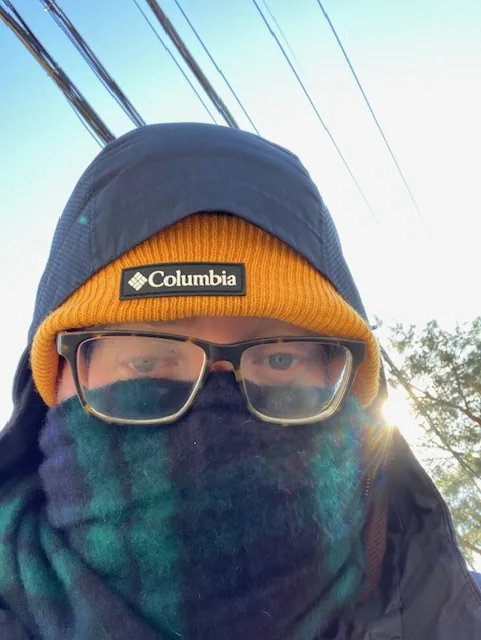
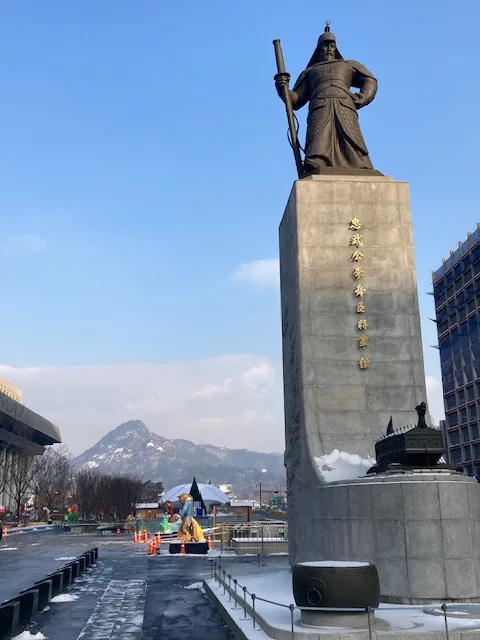
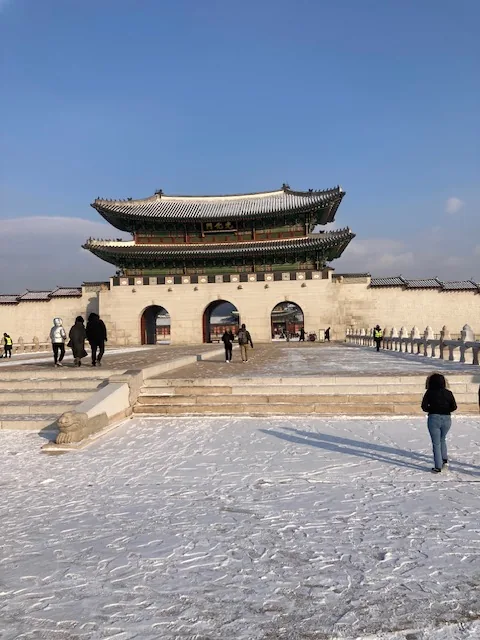
Having had a lovely fry-up for breakfast at the hotel, I set off for my first proper day in Seoul. If you are going in December, just to be aware that it can be cold or bitterly cold. I was a bit unfortunate that an arctic plume had come down from China for my next 3 days, so the real-feel temperature was hovering around -10 to -15°C, but it was still an interesting experience! The main thing to remember is to bring thermals, very strong gloves, a warm hat and a scarf, and you generally are fine. My first stop was Gwanghwamun Square, which is the main historic central street in Seoul leading to the beautiful Gyeongbokgung Palace. The square has an impressive statue of King Sejong the Great, who created the Korean alphabet (Hangul) in 1443 to replace Chinese characters, and also a statue of Admiral Yi Sun-sin standing on a plinth, who was Korea’s most revered military hero and fought during the Imjin War against the Japanese in the 1500s. Once you walk around the square for a while, and see the monuments, the next step is to enter into the beautiful Gyeongbokgung Palace through the imposing Gwanghwamun Gate.
Gyeongbokgung Palace
As you walk in, you enter a large open courtyard with the ticket offices to the right of this as you go in. A fun fact is that if you rent hanbok clothing in stores nearby you can go into the main palace for free which is handy, and also get lots of fun photos to remember your trip. An item to be aware of is that changing of the guard ceremonies take place at set times and are really interesting to see as they use traditional Korean instruments and wear their traditional outfits, so ensure you are there when that takes place. I was there when there was snow on the ground, and seeing the beautiful palace buildings, mountains in the distance, and the ceremony taking place, was very special. As you are in this courtyard, the National Palace Museum of Korea is on the left, and has lots of interesting ornaments and art from the Joseon period (I visited this during a subsequent summer visit so will talk about this in another blog). As you enter the palace and make your way further in, you pass by multiple old buildings and gates, all in the Korean architecture style, and it is fascinating going further and further into the complex. If you head for the top right corner, the National Folk Museum of Korea is well worth a visit.
National Folk Museum of Korea
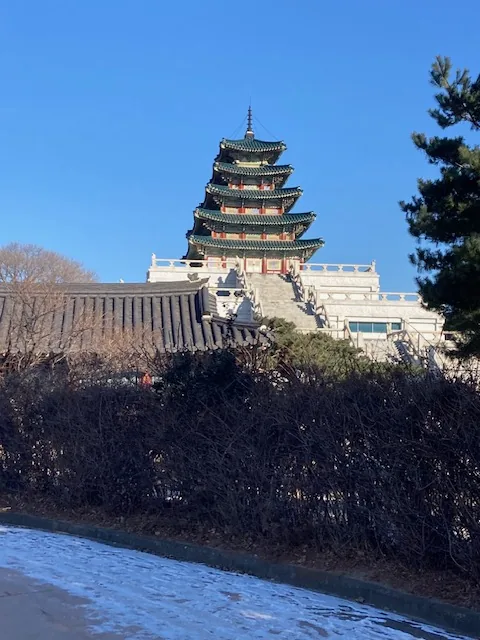
The National Folk Museum of Korea is situated in a beautiful building which was constructed in 1972 in the style of a Korean monument. If you are hungry or need a rest, there is a good café here, and while I was there I got to see a Pungmul dance performance – so keep an eye out for any events on during the day that you are there. The museum itself is really interesting, storing 4,000 artefacts relating to Korean life. You see mannequins in exhibits showing clothing, tools and farming methods from different ages, as well as seasonal customs (weddings, funerals) and rituals, and there are replica buildings showing how Korea was through the decades. I did not know too much about Korean customs before this, so it was really interesting to learn all about this.
Bukchon Hanok Village
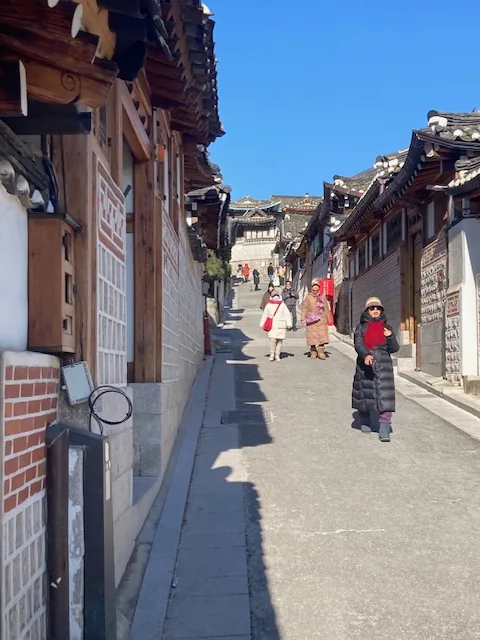
If you exit out of the gate beside the National Folk Museum of Korea, you can walk a beautiful street along Bukchon-ro 5-gil past various museums like the National Museum of Modern and Contemporary Art. This area, called Hwa-dong, is very relaxing if you just want a quiet walk away from the bustle, and to stretch your legs, and it has many tea houses and cafes where you can relax. Once you meet a road called Bukchon-ro, turn left and walk up before taking a left into a street leading up into Bukchon Hanok Village, which is on a slope leading up the hill. It is a residential neighbourhood which has retained and restored many of the traditional Korean houses called hanok dating from the late 1800s and early 1900s. As many people going to the palace also come here, you can get some beautiful images of people in hanbok as they make their way up with the houses and the city in the background. It is a bit of a steep climb but the views and relaxed feeling you get are worth it!
National Museum of Korea
(Note: this is mainly good to visit if your hotel is near Yongsan or Itaewon, or if you are happy to go a bit further on the subway)
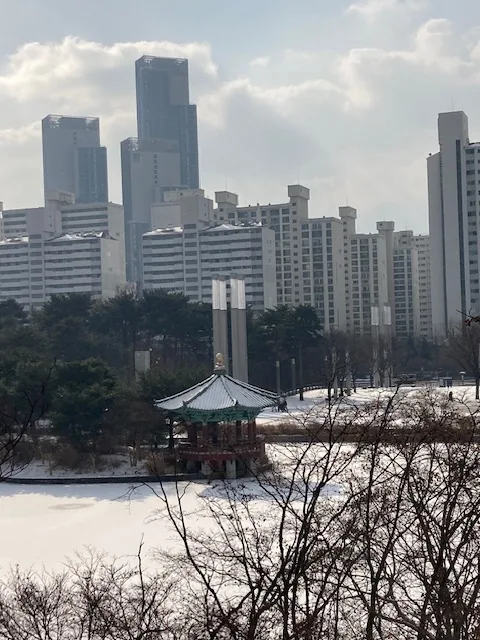
Having eaten earlier at the café, I decided to return to Yongsan from the Bukchon Hanok Village area, and visit the National Museum of Korea, as it was back near my hotel (about a 15-minute walk). I took the subway, and walked up to the main building. From here, you get a beautiful view of the surrounding area (including the tall apartment block buildings), and you can walk in a garden area, including seeing the beautiful Korean mirror pond. The museum has a really interesting section outside, where the building roof spreads over a courtyard area and when I was there many people were sitting there, having a coffee and enjoying the view. The museum itself inside was very impressive, including seeing the Gyeongcheonsa Temple Pagoda, which is a very large ten-storey stone pagoda carved from marble in 1348. Other items to see when you are inside the museum include the Pensive Bodhisattvas bronze statues, the Silla gold crown and the Joseon Dynasty Celestial Globe and Water Clock Components, as well as a huge number of beautiful paintings and ornaments from Korean history. If you like history and art like I do, this is definitely a great place to visit. As I was quite tired I ended up eating some Korean food in the museum restaurant, but if you prefer something more traditional Itaewon is nearby (within walking distance) and has a huge selection of Korean foods including Korean Pork Barbecue (Samgyeopsal), Korean Fried Chicken & Beer (Chimaek), Korean Barbeque and Budae Jjigae (Korean Army Base Stew) and Dolsot Bibimbap, all of which are really suited to eating out with friends and family. As it was late, I returned to my hotel to get some more sleep to get over the jet lag, and get ready for an action-packed day 3.
The itinerary
Day 3
Focus on fun, commercial stuff – giving the history a rest!
Gangnam and Starfield Library
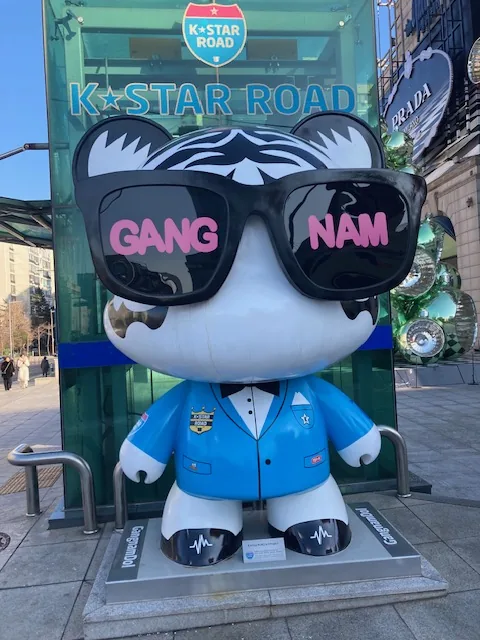
I started my day by taking the subway over the river to Gangnam-gu, well known internationally from Psy’s Gangnam Style song. It is the main upmarket shopping and retail area in Seoul south of the River Han and leads into Cheongdam, where many Korean celebrities live in expensive apartment blocks. I walked down K-Star Road towards the COEX Building, and along about a 1-kilometre stretch, they have 17 colourful life-size bear models, each representing legendary K-pop groups like BTS, EXO and 2PM, and it’s fun to read each one and see the group colours represented – great for photos! As you walk down into Cheongdam, you pass lots of very high-end fashion retailers, giving an insight into the level of commercialism and love of fashion in Seoul. At Samseong Junction, I turned left and headed towards the COEX Mall. On the left as you approach it, is the Bongeunsa Temple, a beautiful Buddhist temple (I visited this on my second trip to Seoul so will talk about it in a later blog, but well worth a visit). As you enter the COEX Mall, a large shopping and entertainment district, you have the following options to visit (which probably take 1 hour together):
- The Sea Life COEX is an aquarium with large tanks of many species of fish, sharks and marine life. It is good, but pretty much like any aquarium you would see worldwide, so more one if you have children.
- Round the back of the building there is a large hands sculpture for Psy’s Gangnam Style dance which is fun for a video or photo.
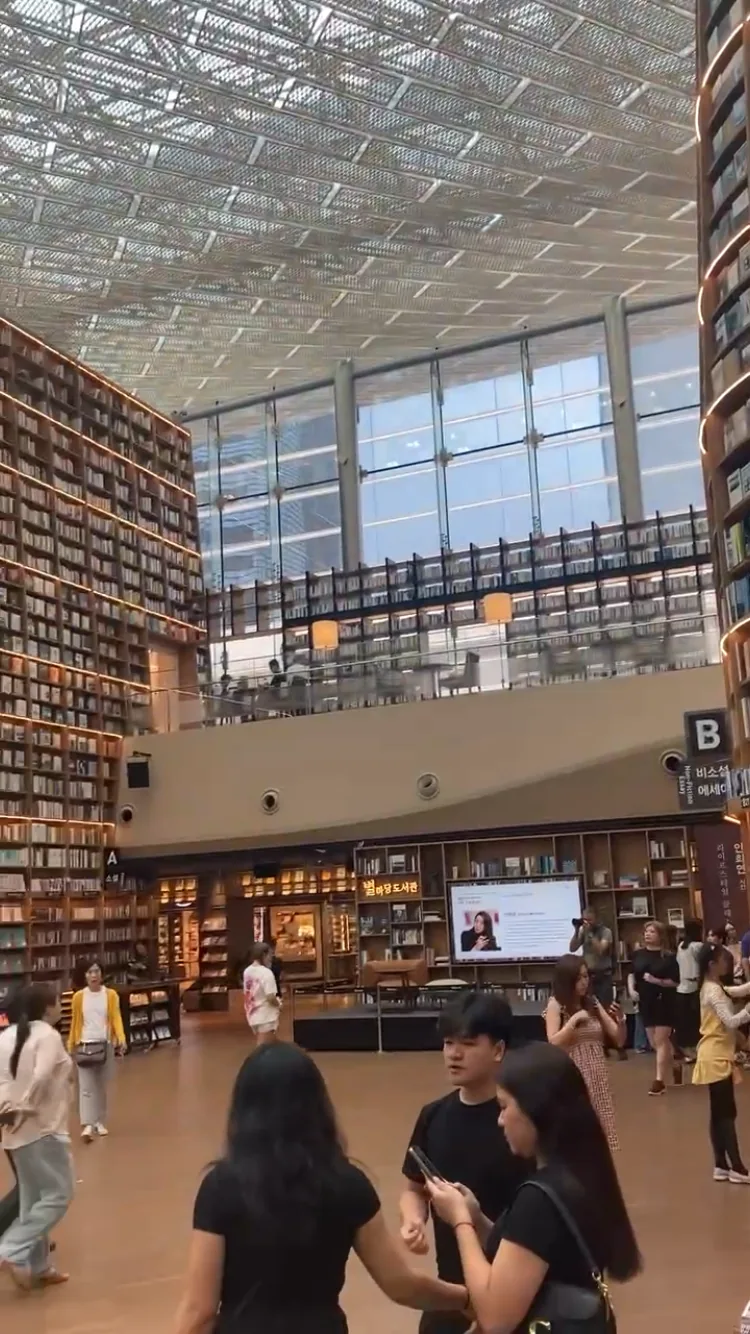
- There is the Starfield Library, which is visually really cool – it’s a library with books stacked to the ceiling all around, which is a great photo for Instagram. There is also a Starbucks beside it so it is a nice place to relax with a coffee and just look up at the books with everyone gathering in the centre.
Lotte World Tower
From there, I next took the subway from Samseong Station (beside COEX Mall) to Jamsil Station – which is about a 15 minute journey, to visit Lotte World Tower observation deck. The building is really impressive – it is 123 storeys tall (555 metres tall) and is the sixth tallest in the world, with the glass design of the building being inspired by traditional Korean ceramics and calligraphy brushes. You enter inside the building in the bottom, which is beside a large shopping complex, and you walk through a short museum detailing the building’s construction, before going in an elevator (with virtual reality led) all the way to the observation deck. Up there you can walk around and see incredible views (floor-to-ceiling glass) – as it was so cold I could see incredibly far and you get a view of all areas of Seoul, including the Han River, which you would not normally get. Additionally, there is a glass floor section which is not for the faint of heart, where you can step over and look down vertically to the ground. After admiring the view I returned down, and got the subway back to my hotel to make the journey back to Incheon Airport before the next leg of my journey.
Despite the freezing temperatures, I really enjoyed my three days in Seoul, from the historic palaces and museums to the modern shopping areas and views across the city. It was a great introduction to the city, and I would definitely recommend visiting in winter if you get the chance!
Winter in Seoul can be bitterly cold. Bring thermals, gloves, a warm hat and a scarf, and check current opening hours and ceremony times before travelling.
Transport routes, admission arrangements and attraction information can change.
Image credits: Statue of Brothers at the War Memorial of Korea photograph by Josip Ivankovic (Unsplash). All other photographs in this article are © wordsfortravel.
Share this guide
Know someone planning a winter trip to Seoul? Send them this guide.