A place I won't forget
Some places are even more striking in person than they look in photographs. For me, Sagrada Família is one of them.
Arriving at Sagrada Família
If you are ever in Barcelona, the Sagrada Família basilica is a must-see for your list. Located in the pretty, tree-lined Eixample area of Barcelona, you can get there on foot, by metro (L2 – Purple, or L5 – Blue, directly to Sagrada Família station) or by bus (19, 33, 34, D50, H10 or B24).
I walked up to it through the park, Plaça de la Sagrada Família, where you get a quieter view of the towering, 172.5-metre-tall basilica, topped by the central Tower of Jesus Christ. When finished, the basilica is due to feature eighteen grand spires in total, a highly symbolic layout which its celebrated architect, Antoni Gaudí, designed to represent the twelve Apostles, the four Evangelists, the Virgin Mary and Jesus Christ. The project has been under construction for over 140 years and has relied entirely on private funding, including donations and ticket sales, to finance its enormous construction costs.
Two very different façades
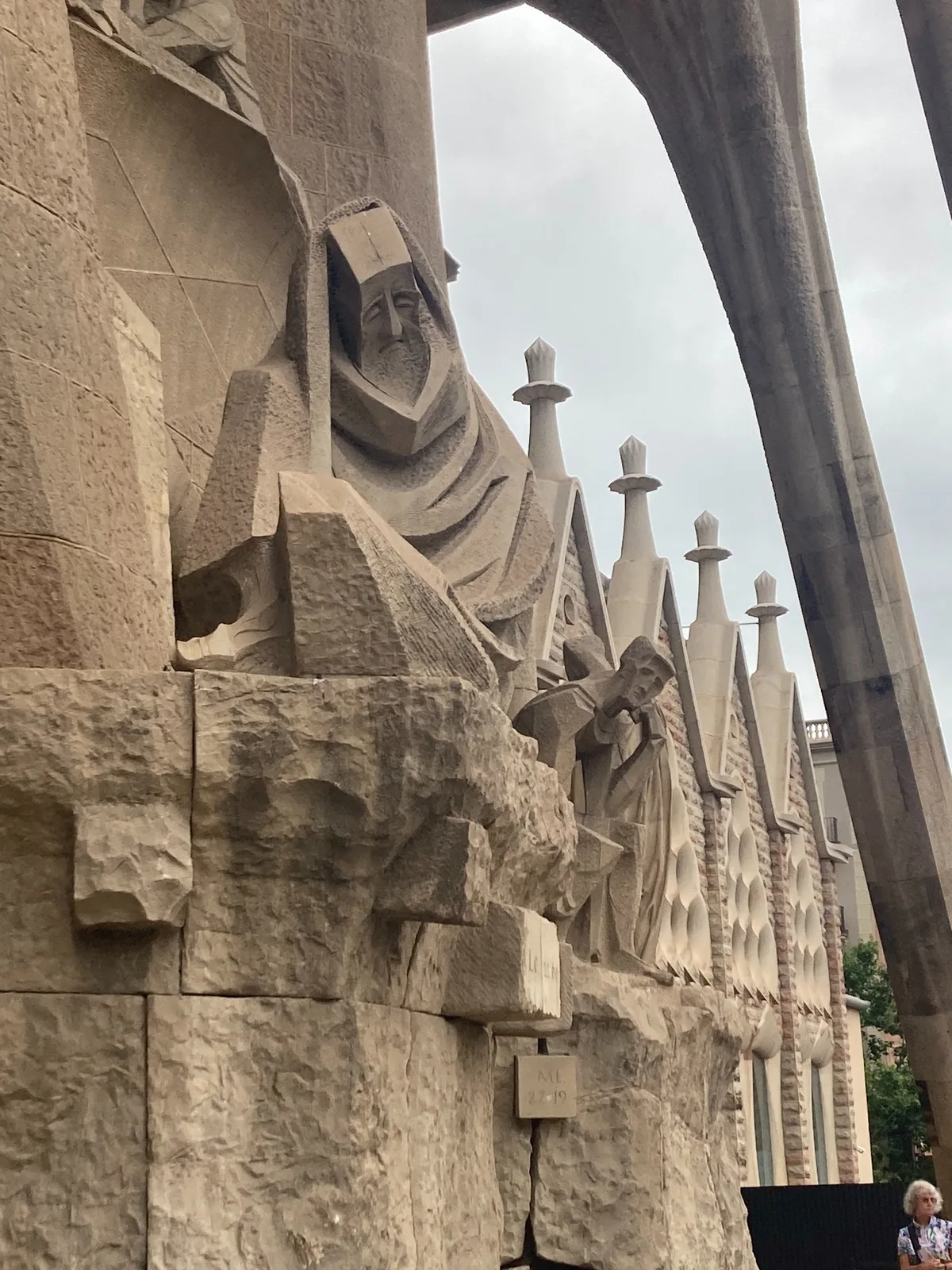
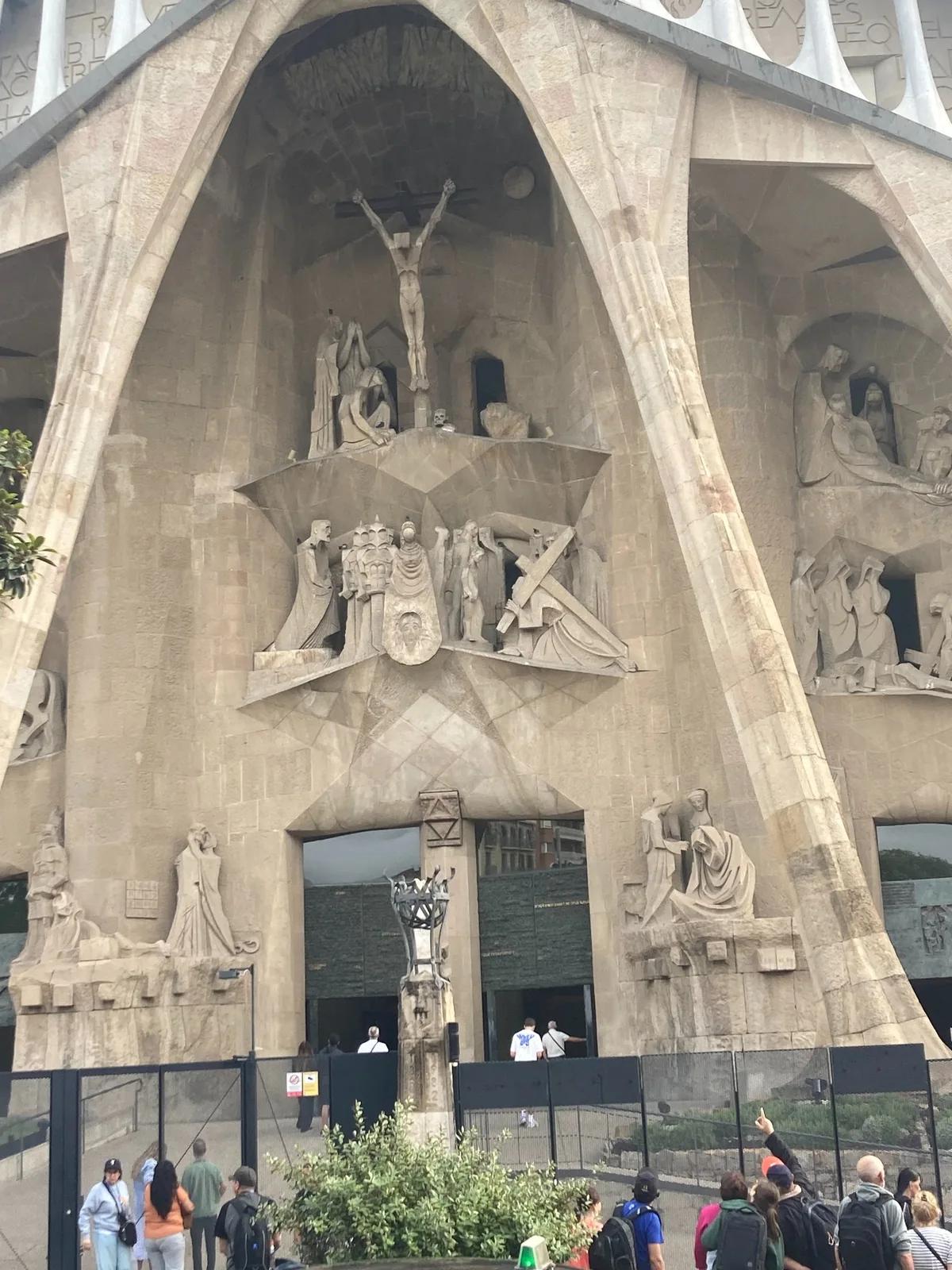
From the park side, you see the Passion façade, which was designed to look bleak and foreboding to represent the crucifixion. The columns on this side have a skeletal, bony appearance, while the statues by Josep Maria Subirachs are carved in an angular, blocky style and are intended to look sorrowful and dramatic.
To get to the main visitor entrance, you can walk around the basilica towards Carrer de la Marina, where you arrive at Plaça de Gaudí, a smaller park area with a pond. If you want an interesting photo, you can angle your camera so that the basilica appears in the reflection of the water!
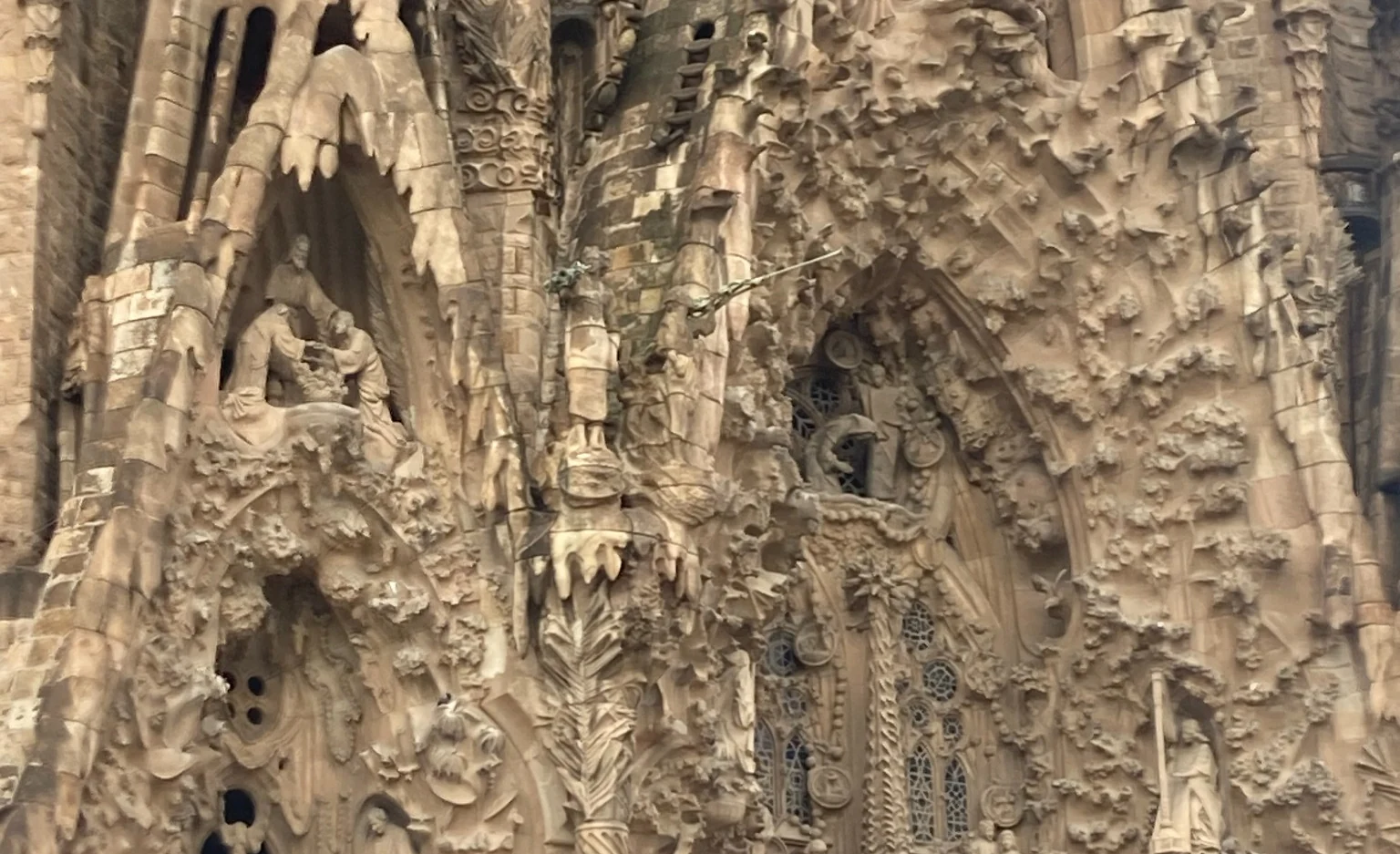
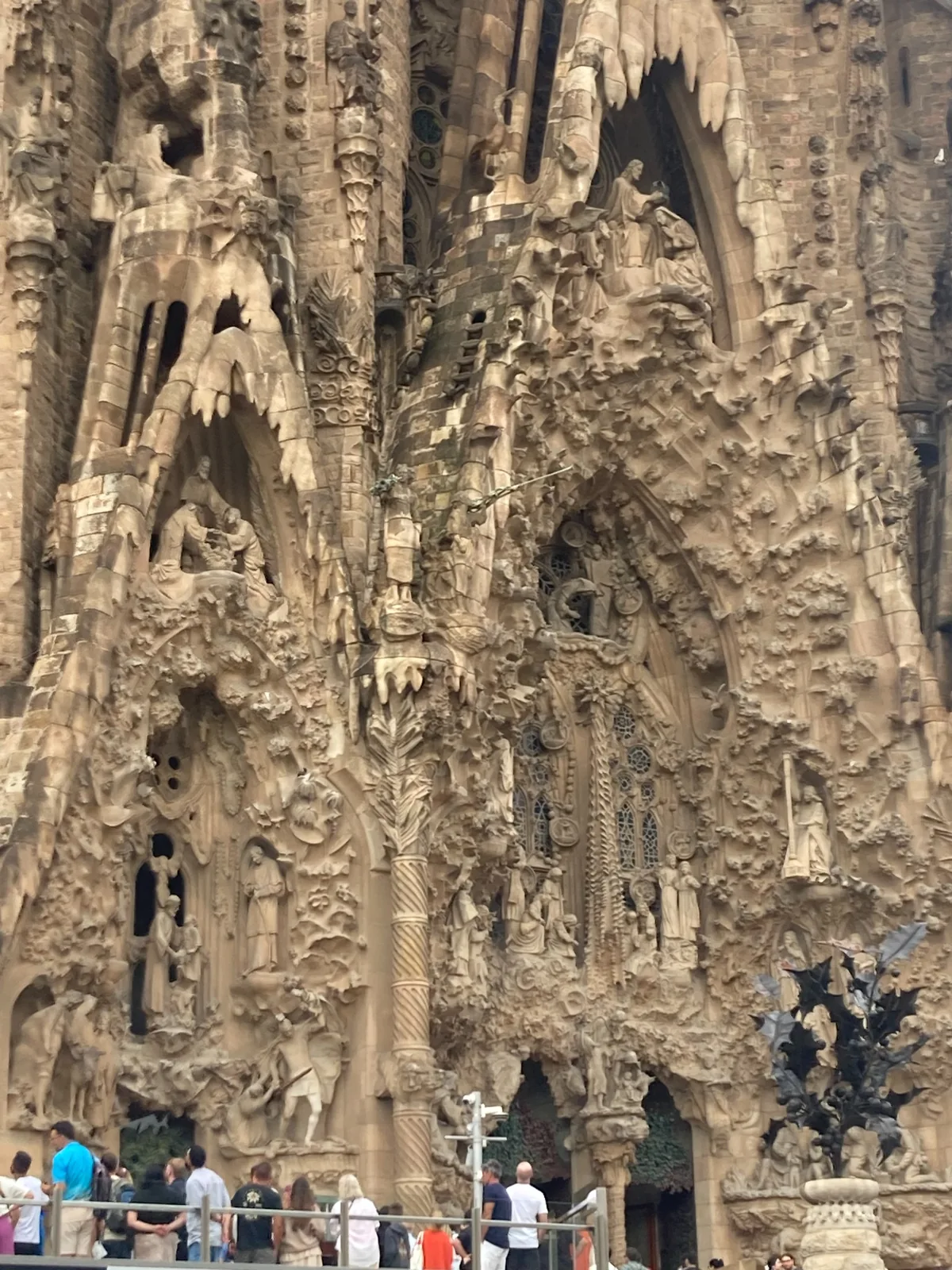
From here, you can look up and see the beautiful Nativity façade, which was designed to be sculpted in a joyful and welcoming manner. The whole façade is covered in natural elements which look as though they are growing from the stone, and there are intricate carvings of animals and birds, in addition to plants and fruit. The façade contains different scenes, including lifelike figures depicting the birth of Christ, the Wise Men and angels playing musical instruments, all looking incredibly dynamic.
Tickets and entering the basilica
Once you have taken in the view, you can head to the visitor entrance on the Nativity side, along Carrer de la Marina, where you pass through security before entering the basilica. As it is incredibly popular, you should ensure that you pre-book an entry ticket (around €26 for standard adult admission at the time of writing) well in advance, especially during busy periods.
Additionally, if you want to take the lift up one of the towers for a view of the city, you should buy an upgraded ticket in advance, rather than assuming you can add this on when you arrive. Prices and access arrangements can change, so check the official Sagrada Família ticket prices before you go.
Inside: light, colour and a stone forest
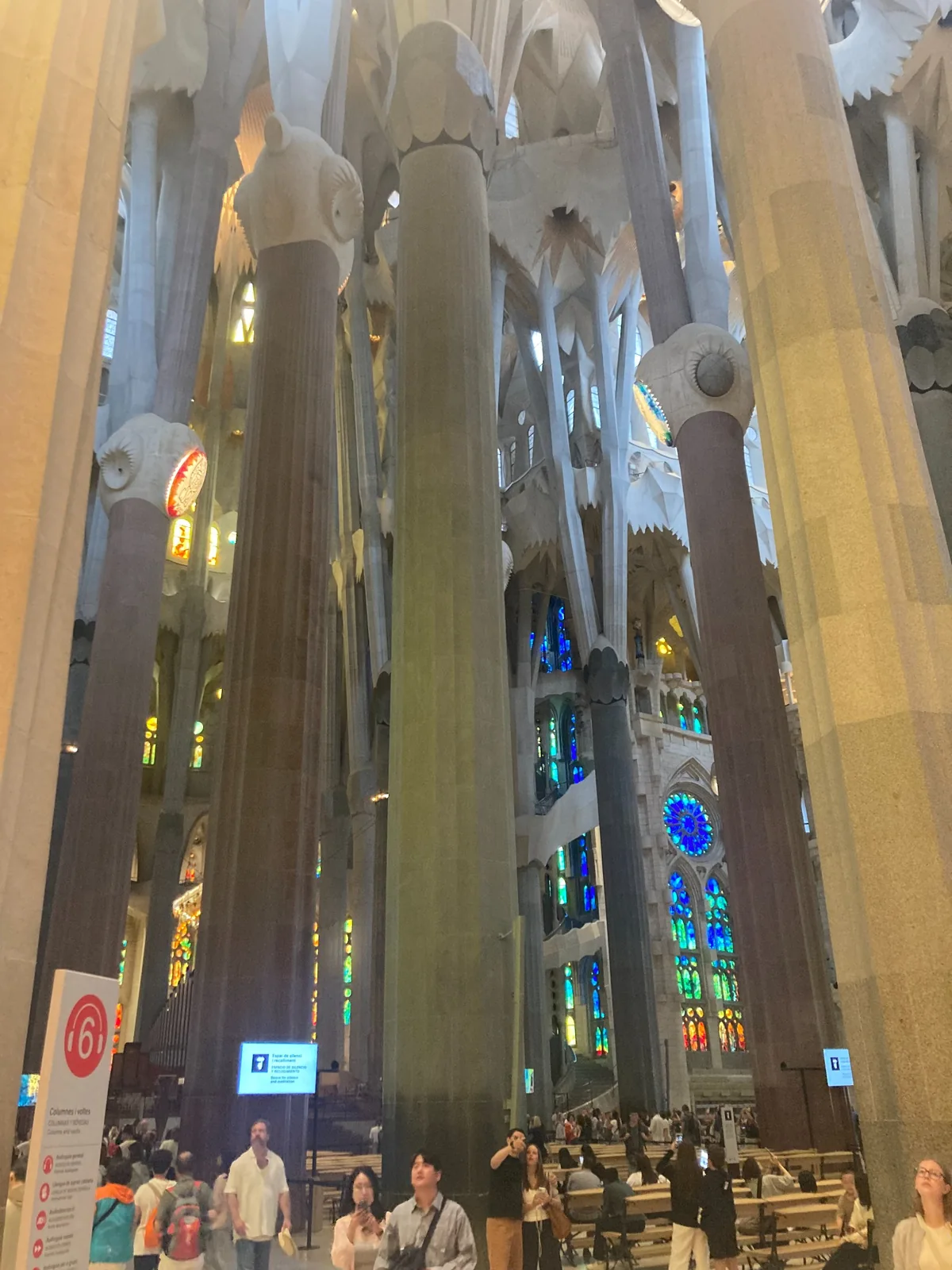
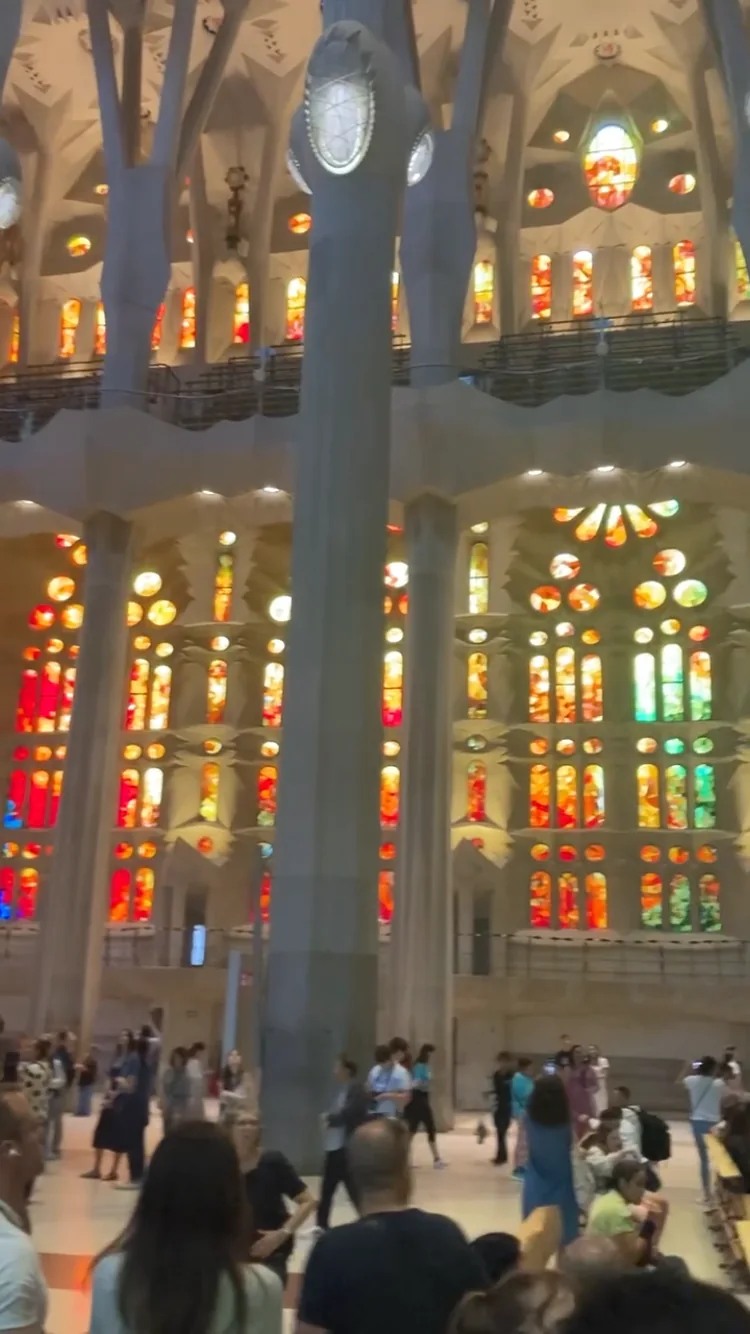
Once you enter, the view is spectacular as sunlight streams through the blue, green, orange and red stained-glass windows. The columns of the basilica are shaped like tree trunks, making the interior look as though it has merged into a stone forest. I would recommend visiting in the late afternoon, around two hours before sunset, when the lower sun can enhance the red and orange colouring, although the effect depends on the time of year and weather.
The ceiling is structured in a complex arrangement of geometric, star-like patterns, while a minimalist canopy featuring a suspended crucifix hangs above the altar.
History, Gaudí and the unfinished work
If you like history, there is a museum on the lower level which displays historical models, drawings and information about the construction of the basilica. It gives you an appreciation of just how ambitious Gaudí's original vision was, and how much work has gone into bringing it to life. You can also learn about the continuing construction work, which is particularly fascinating given that the basilica is still unfinished after more than a century.
Gaudí himself was laid to rest in the basilica's crypt in 1926, although the crypt is separate from the areas included in the standard tourist visit.
An interesting fact is that the future main entrance, the Glory façade, is still under construction and has caused disputes within the city. Gaudí envisioned a grand staircase leading up to this entrance, but the proposed design could affect existing residential buildings across Carrer de Mallorca.
Once you exit, you can circle around for a final view of the many architectural flourishes, and then stroll back into Barcelona for an afternoon drink.
KEEP READING
Continue exploring
More travel stories and practical guides from Words for Travel.