A place I won’t forget
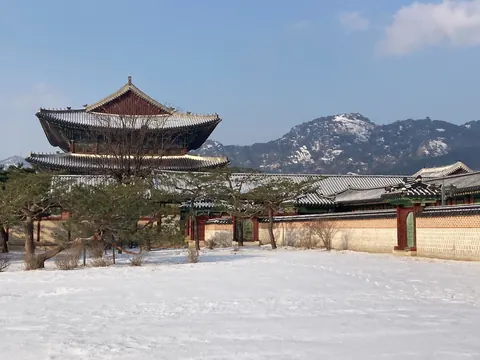
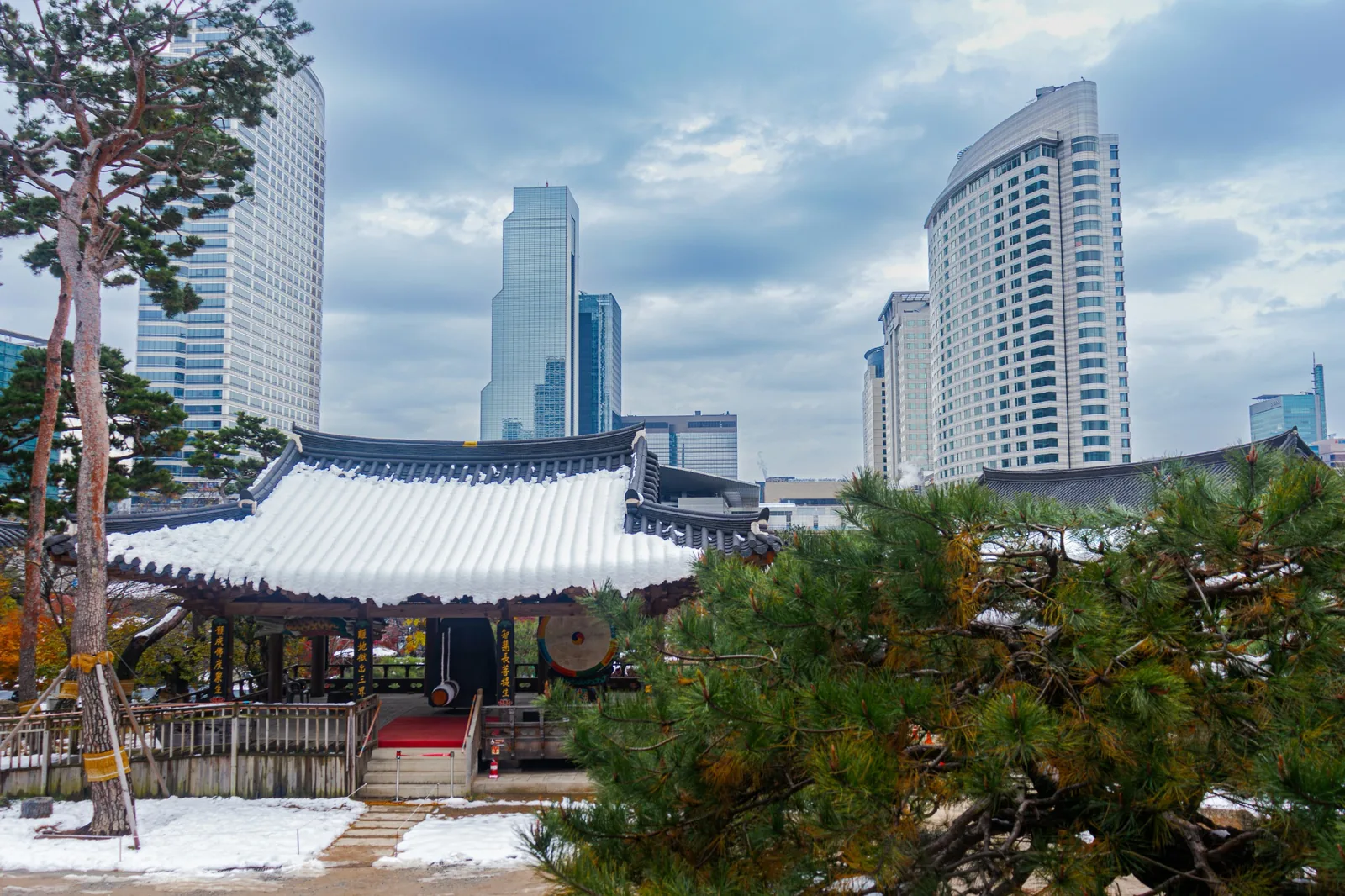
A quiet break from busy Gangnam, with a remarkable contrast between traditional temple buildings and the surrounding city.
Why visit Bongeunsa Temple
When I was last in Seoul in 2024, I visited the Bongeunsa Temple. I would really recommend it, as it is a beautiful place but it also is situated in the bustling Gangnam district, so it is like a retreat for an hour or two from the busy streets and a place to be with your thoughts and reflect.
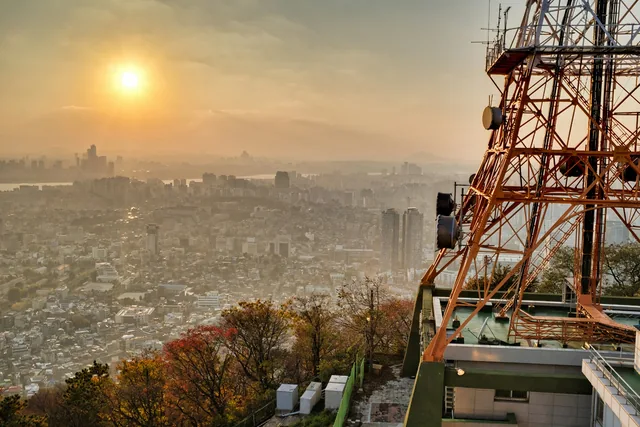
Note: I unfortunately do not still have my photos from my trip to the temple, but I have included beautiful ones from online which I feel capture how the temple looks well.
Getting there
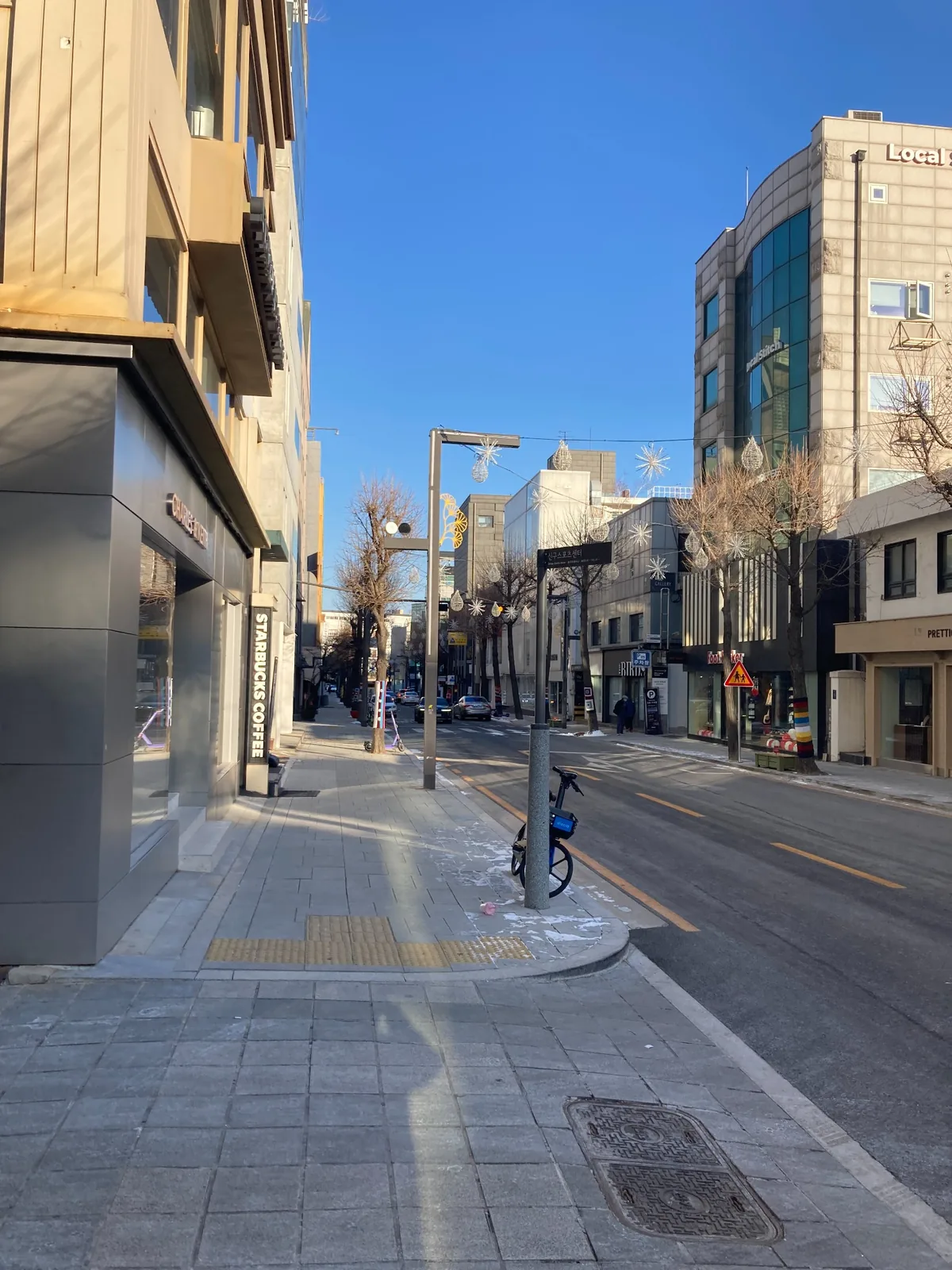
When I was there, I decided to get off the underground at Apgujeong Rodeo Station, which is on the yellow Suin–Bundang Line, as you can walk through Cheongdam and see the Gangnam Dols (large teddy bear-like statues with names of K-pop groups) on the K-Star Road. If you wish to visit all the attractions at the COEX centre, I have covered that in my three-day Seoul itinerary, or if you wish to see spectacular views of Seoul, you can read my Namsan Mountain article here. If you also want to get to a stop closer to the temple (you may have mobility issues and do not want to walk far), there is also a stop directly outside at Bongeunsa Station (Line 9, Exit 1).
The history of Bongeunsa
Across from the COEX centre is the entrance to the Bongeunsa Temple. By way of background, this is a 1,200-year-old Buddhist sanctuary, which is nestled quietly between the huge skyscrapers of Gangnam and Cheongdam commercial centres. It was founded in 794 during the Silla Dynasty by State Preceptor Yeonhoe (Yeonhoeguksa), who was the highest-ranking Buddhist monk in the kingdom during the reign of King Wonseong. It was originally called Gyeonseongsa and was renamed Bongeunsa in 1498.
The temple is completely free of charge and is open from 5am to 10pm each day.
The entrance and courtyard
You pass through Jinyeomun, the Gate of Truth, where four large wooden statues of the Heavenly Kings stand inside to guard the temple. You then walk up a gentle slope to the main visitor centre. This section is beautiful as you walk under multicoloured lanterns and it has a very peaceful feeling. The people who work at the visitor centre are lovely, and English-language guidance and brochures about the wider site are available.
When you reach the upper section, you can enter the Beopwangnu pavilion, which is used for Buddhist ceremonies and gatherings. You can also see Daeungjeon, which is the grand wooden hall directly across the courtyard and houses beautiful golden Buddha statues. As it is a religious site, it is courteous to remove your shoes if going inside prayer halls, dress modestly (e.g. wear a jumper to cover your arms if you have one and remove your hat inside), and to be respectful to the other people and monks who are doing their prayers at the site. I found it was fine to take photos outside, but it is best to avoid it inside the building as people are praying. If you would like to light a candle or incense, you can leave a cash donation where permitted and do a quiet bow when finished.
The Maitreya Buddha
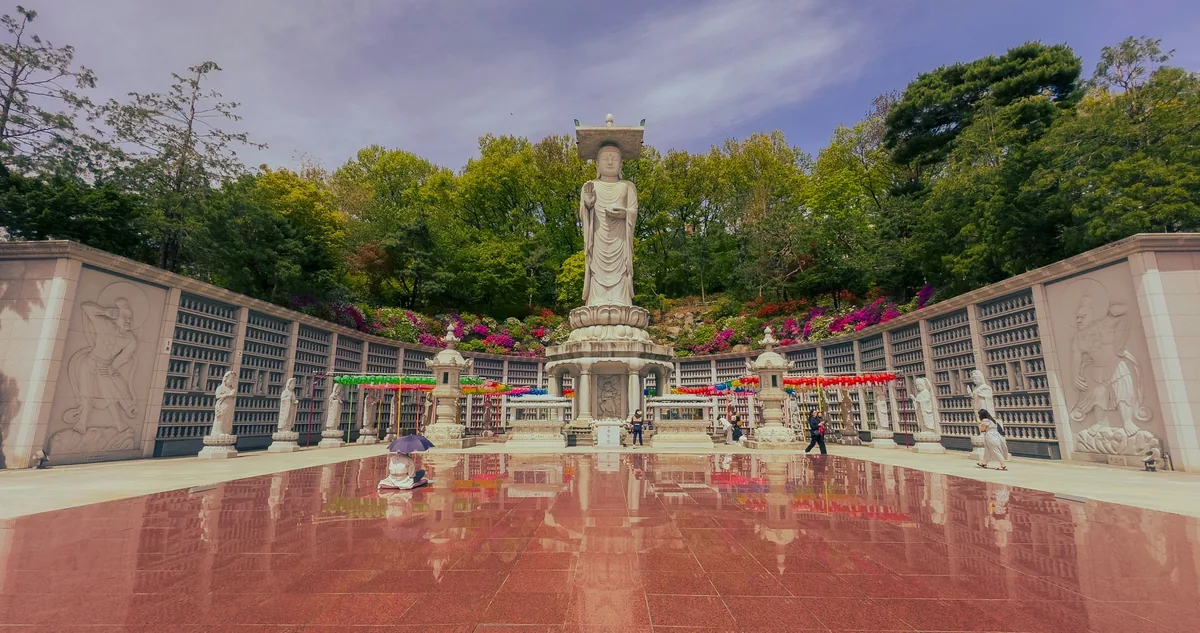
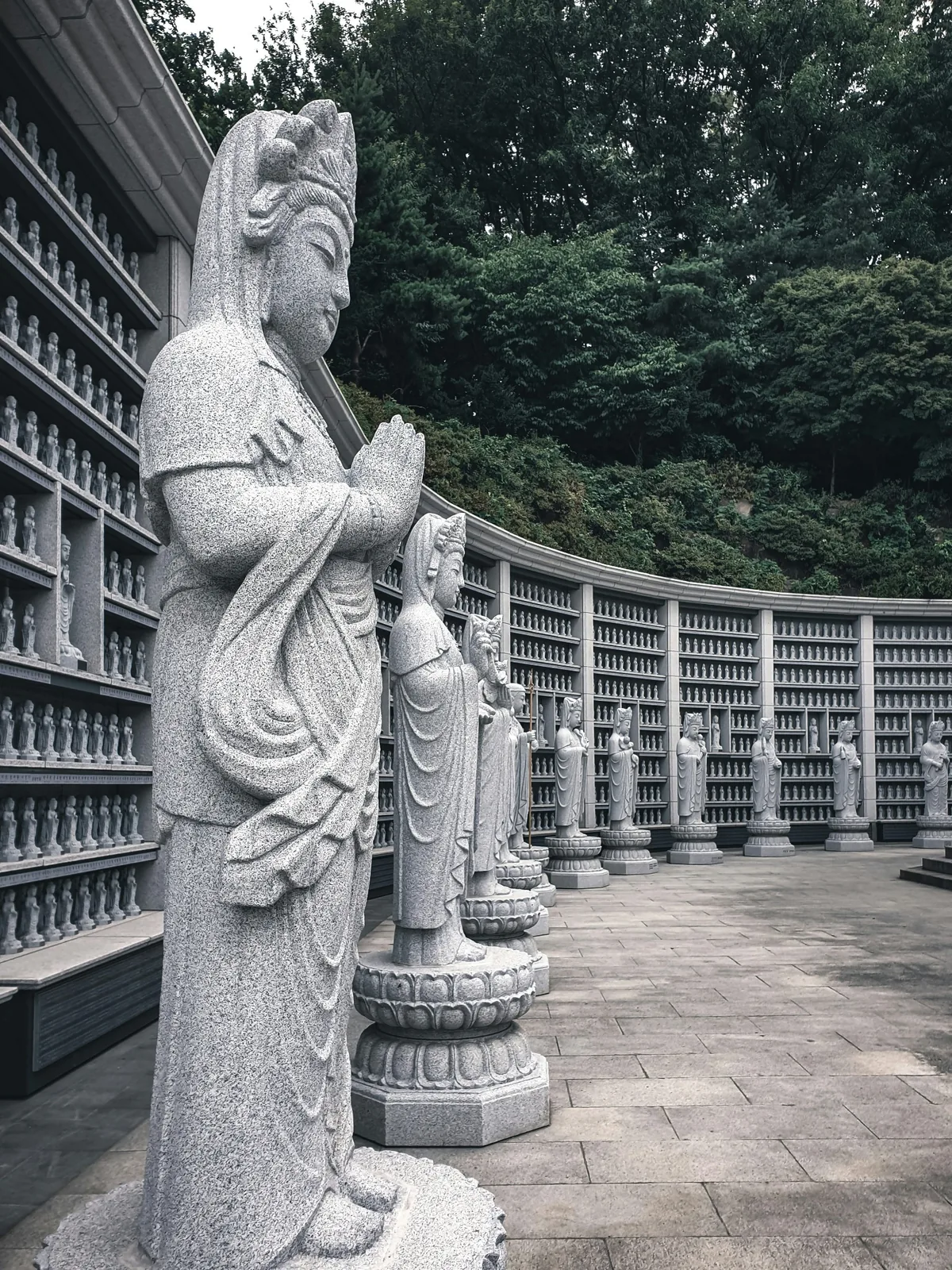
Once you have seen the courtyard, you can make your way through to the left and continue up the side slope to the centrepiece of the site at the top, which is the 23-metre Maitreya Buddha (Mireuk Daebul). This huge stone statue is the temple's most famous landmark and was completed in 1996, after taking ten years to construct. It is one of the tallest stone Buddha statues in Korea and represents Maitreya, the future Buddha, who is believed to bring peace and enlightenment to the world. The statue is made from pale-coloured stone and stands on a large lotus pedestal, surrounded by smaller stone Buddhist statues and carvings, which make the whole area particularly impressive. I found it is really nice to take a moment here and think for a while and look back over the nearby skyscrapers (it is a really interesting contrast).
More to see around the temple
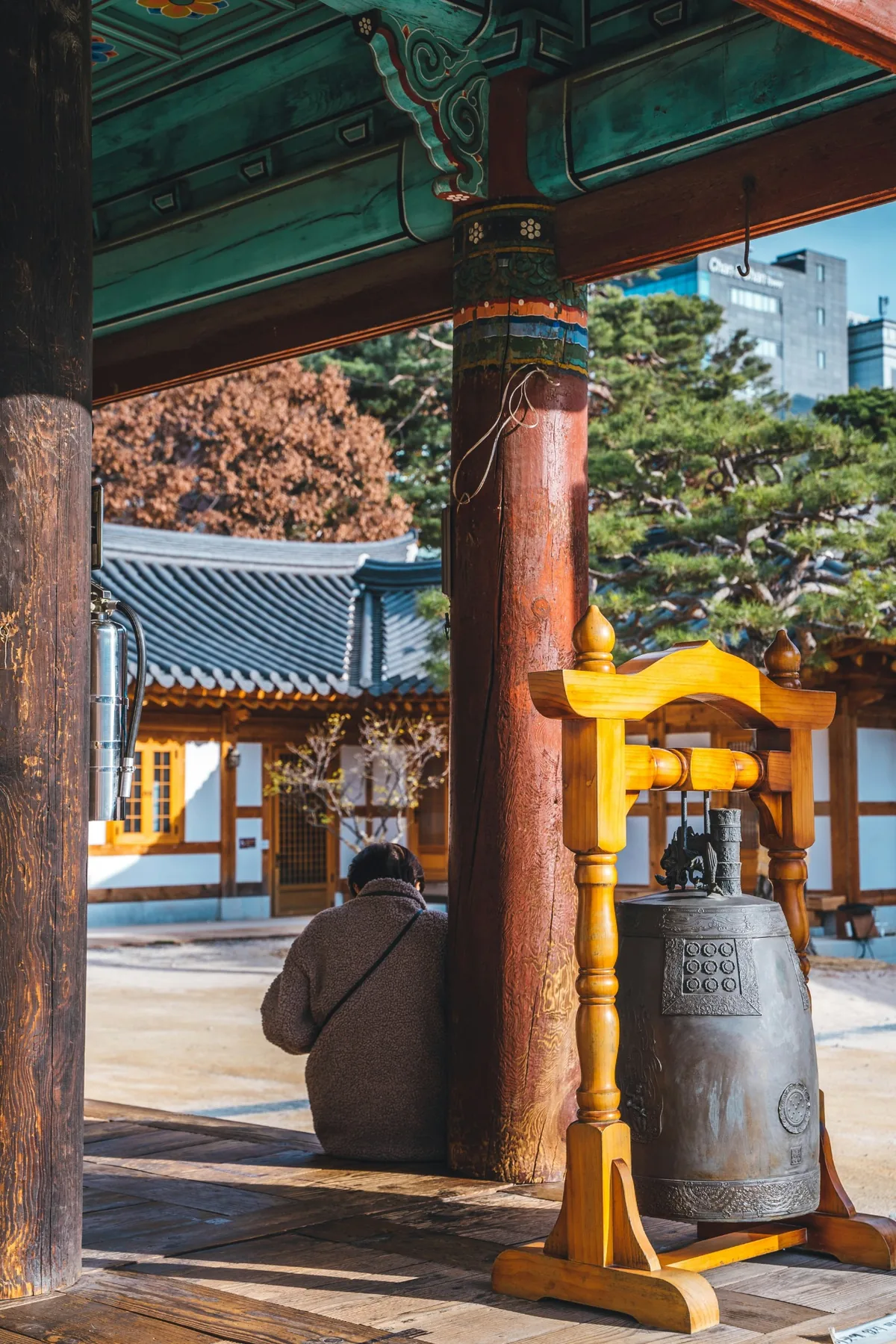
While wandering the wider site, if you like history you should look for Panjeon Hall, the temple's oldest surviving wooden building (1856) that stores over 3,400 hand-carved scripture printing blocks, as well as the Jongnu Bell Pavilion that contains four classic Buddhist instruments – a massive bronze bell, drum, wooden fish, and cloud-shaped gong – which get struck at dawn and dusk.
I also learnt while there that there is the option to book a short Temple Life session or overnight Templestay to try Zen meditation, tea with a monk, or other traditional Buddhist cultural activities. These programmes can be booked in advance, depending on availability.
Finally, behind the upper shrines there are quiet wooded walking paths around the slopes of Sudo Mountain, but I feel the main site has enough to keep you very interested while you are there, and some of the paths are very steep!
The traditional teahouse and leaving
I did not go myself, but I also read in my guidebook that there is a Yeonhoe Dawon (Traditional Teahouse, also known as Yeonhoeru) tucked inside the grounds which serves traditional Korean teas (like green tea, ginger tea and ssanghwacha) alongside traditional Korean sweets such as rice cakes, and is a popular place to relax and have something to eat while there.
Once you are finished, you can make your way down the slope to the entrance you came in and the large COEX complex and the rest of Cheongdam is right at your doorstep.
For a quiet break from a busy trip, this is definitely a place I would recommend you include on a day trip around the Gangnam district of Seoul.
Image credits: Temple and skyline cover photograph by Fili Santillan / Unsplash; temple bell by Romeo A / Unsplash; Maitreya Buddha by Mihnea Petru Rafailescu / Unsplash; Buddhist statues by Yumi Kim / Unsplash. Cheongdam street photograph is my own (© wordsfortravel.).
Enjoyed this guide?
Send it to someone who might be planning a trip, or save it for later.
KEEP READING
Continue exploring
More travel stories and practical guides from Words for Travel.